 Indietro
General Biology: Scientific Method, Life Properties, and Biological Organization
 01:35

Termini in questo insieme (20)
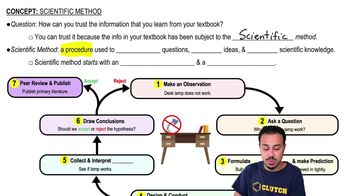
Science is a way of knowing that uses an evidence-based process of inquiry to understand the natural world through observations, hypotheses, predictions, experiments, and data analysis.
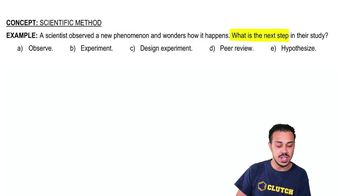
Observe a phenomenon, ask a question, form a hypothesis, make a prediction, experiment, analyze results, and draw conclusions.
The independent variable is the factor manipulated by the researcher. The dependent variable is the measured outcome that depends on the independent variable.
An experiment that compares an experimental group with a control group to isolate the effect of the independent variable.
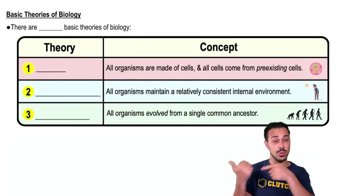
Evolution is the core theme, explaining the unity and diversity of life through change over generations by natural selection.
Order, reproduction, growth and development, response to environment, energy processing, regulation, and evolutionary adaptation.
The cell is the fundamental structural and functional unit of life.
Life is classified into hierarchical groups: Domain, Kingdom, Phylum, Class, Order, Family, Genus, Species.
Domains Bacteria and Archaea contain prokaryotes; Eukarya includes protists and kingdoms Fungi, Plantae, and Animalia.
New properties that arise from the specific arrangement and interactions of parts at each level of biological organization.
Molecule, organelle, cell, tissue, organ, organ system, organism, population, community, ecosystem, biosphere.
Structure and function are closely related; the shape of a molecule or organ correlates with its specific function.
Energy enters as sunlight, is converted to chemical energy by producers, passed to consumers, and exits as heat.
DNA stores hereditary information and provides the blueprint for protein synthesis, controlling cell activities.
A hypothesis is a testable prediction; a scientific theory is a broad explanation supported by extensive evidence.
Mice with coat colors matching their habitat had fewer predator attacks, supporting the hypothesis that camouflage protects from predation.
To control variables that could affect results, ensuring differences are due to the independent variable.
Exploration and discovery, feedback from the scientific community, and societal benefits and outcomes.
Technology applies scientific knowledge for practical purposes, and scientific research benefits from technological advances.
Systems biology models biological systems by analyzing interactions among their parts to understand emergent properties.