 Indietro
General Biology Unit 1: Chemistry of Life
 02:13

Termini in questo insieme (20)
Ionic bonds form by transfer of electrons creating charged ions; covalent bonds form by sharing electrons between atoms.
Unequal sharing of electrons in polar covalent O–H bonds and bent molecular shape create partial charges, making water a polar molecule.
Hydrogen bonds form between water molecules' partial charges, producing cohesion, adhesion, surface tension, high specific heat, and ice's lower density.
Water's hydrogen bonding allows it to absorb heat with little temperature change, stabilizing environments and organisms' internal temperatures.
Hydrogen bonds hold water molecules in a lattice structure when frozen, spacing them farther apart than in liquid, making ice less dense.
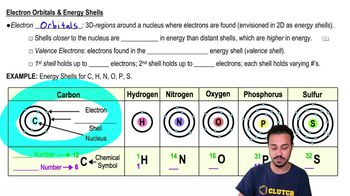
C: carbon skeletons; H and O: water and organics; N: amino groups and bases; P: phosphate groups in nucleotides and phospholipids; S: amino acids and disulfide bonds.
Hydroxyl (–OH) and phosphate (–PO₄) groups strongly affect polarity and charge, increasing molecule's interaction with water.
Dehydration synthesis joins monomers by removing H₂O; hydrolysis breaks polymers by adding H₂O, breaking covalent bonds.
Monomers: monosaccharides; polymers: polysaccharides linked by glycosidic bonds formed via dehydration synthesis.
Saturated fatty acids have no C=C bonds and straight chains; unsaturated have ≥1 C=C causing kinks, affecting membrane fluidity.
Phospholipids have a polar phosphate head and two nonpolar fatty acid tails, making them amphipathic and key to membrane structure.
A nucleotide consists of a phosphate group, a 5-carbon sugar, and a nitrogenous base.
DNA has deoxyribose and bases A, T, C, G; RNA has ribose and bases A, U, C, G.
Nucleic acid strands have 5′ and 3′ ends; nucleotides are added at the 3′ end during polymerization.
Primary: amino acid sequence; Secondary: α-helices and β-sheets; Tertiary: 3D folding; Quaternary: multiple polypeptide subunits.
Hydrogen bonds, ionic attractions, hydrophobic interactions, and disulfide bonds stabilize protein folding.
Enzymes lower activation energy, increasing reaction rate without being consumed.
Extreme temperature or pH can denature enzymes, altering shape and active site, reducing activity.
Phosphodiester bonds link sugar-phosphate backbone covalently; hydrogen bonds connect complementary bases and break during strand separation.
Polymer organization (e.g., branched vs linear) changes properties and function despite similar monomers, as seen in glycogen vs cellulose.