 Indietro
General Biology: Viruses and Related Concepts
 04:50

Termini in questo insieme (22)
AIDS (Acquired Immunodeficiency Syndrome) is the late stage of HIV infection characterized by a severely weakened immune system.
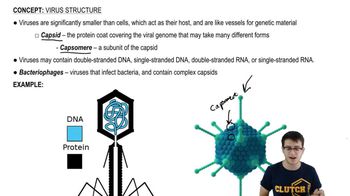
A bacteriophage is a virus that infects and replicates within bacteria.
A capsid is the protein shell that encloses the viral genome.
Covid-19 is a disease caused by the SARS-CoV-2 virus, leading to respiratory illness and global pandemic.
CRISPR-Cas is a bacterial defense system that cuts foreign DNA, used as a gene-editing tool.
An epidemic is a sudden outbreak of a disease affecting many individuals in a community or region.
HIV stands for Human Immunodeficiency Virus, which causes AIDS.
Host range is the spectrum of host cells a virus can infect.
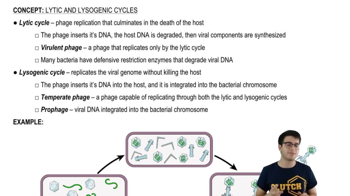
The lysogenic cycle is a viral replication cycle where the viral DNA integrates into the host genome and replicates without killing the host immediately.
The lytic cycle is a viral replication process that results in the destruction of the host cell and release of new viruses.
A pandemic is a global outbreak of a disease affecting large populations across multiple countries or continents.
A phage is short for bacteriophage, a virus that infects bacteria.
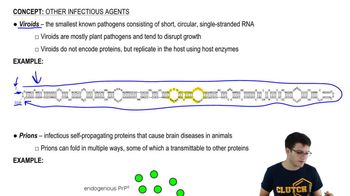
A prion is a misfolded protein that can induce other proteins to misfold, causing neurodegenerative diseases.
A prophage is viral DNA integrated into a bacterial chromosome during the lysogenic cycle.
A provirus is viral DNA integrated into a eukaryotic host genome, remaining latent.
A restriction enzyme is a protein that cuts DNA at specific sequences, used by bacteria to defend against viruses.
A retrovirus is an RNA virus that uses reverse transcriptase to make DNA from its RNA genome.
Reverse transcriptase is an enzyme that synthesizes DNA from an RNA template.
A temperate phage is a bacteriophage that can undergo both lytic and lysogenic cycles.
A vaccine stimulates the immune system to recognize and fight pathogens without causing disease.
A viral envelope is a lipid membrane surrounding some viruses, derived from the host cell membrane.
A virulent phage is a bacteriophage that reproduces only by the lytic cycle, killing the host cell.