 Indietro
General Biology: Water, Biomolecules, Carbohydrates, and Lipids
 01:54

Termini in questo insieme (20)
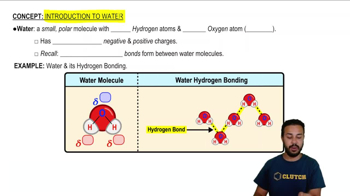
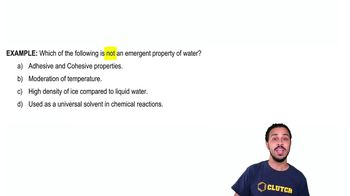
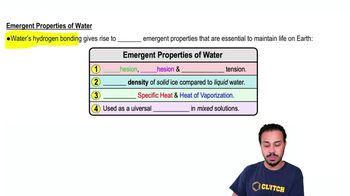
Water is polar, has high specific heat, cohesion, adhesion, and is a universal solvent.
Because its polarity allows it to dissolve many substances by surrounding and separating ions or molecules.
Cohesion is the attraction between water molecules due to hydrogen bonding.
Adhesion is the attraction between water molecules and other substances.
Biomolecules are organic molecules essential for life, including carbohydrates, lipids, proteins, and nucleic acids.
Carbon, hydrogen, oxygen, nitrogen, phosphorus, and sulfur.
Carbohydrates are biomolecules made of carbon, hydrogen, and oxygen, serving as energy sources and structural components.
Monosaccharides, simple sugars like glucose.
Carbohydrates made of two monosaccharides linked by a glycosidic bond, e.g., sucrose.
Long chains of monosaccharides used for energy storage or structural support, e.g., starch and cellulose.
Lipids are hydrophobic biomolecules used for energy storage, membrane structure, and signaling.
Fats (triglycerides), phospholipids, steroids, and waxes.
A lipid made of glycerol and three fatty acid chains, used for long-term energy storage.
Saturated fatty acids have no double bonds; unsaturated have one or more double bonds causing kinks.
They form the bilayer of cell membranes, with hydrophilic heads and hydrophobic tails.
Because they consist mostly of nonpolar hydrocarbon chains that repel water.
Provide quick energy, store energy, and serve as structural components.
Hydrogen bonds absorb heat when broken and release heat when formed, stabilizing temperature.
It allows water to form hydrogen bonds and dissolve many substances, supporting life processes.
Terms like monomer, polymer, dehydration synthesis, hydrolysis, glycosidic bond, and amphipathic.