Skip to main content
General Biology
Il mio corso
Impara
Preparazione agli esami
AI Tutor
Guide di studio
Soluzioni per libri di testo
Flashcard
Esplora
Prova l'app
Il mio corso
Impara
Preparazione agli esami
AI Tutor
Guide di studio
Soluzioni per libri di testo
Flashcard
Esplora
Prova l'app
Indietro
General Biology: Water, Organic Molecules, and Basic Biochemistry
Puoi toccare per girare la carta.
How is genetic information preserved during DNA copying?
Puoi toccare per girare la carta.
👆
How is genetic information preserved during DNA copying?
Genetic information is preserved by
base pairing
between A and T and between G and C across the two strands of the double helix.
Avanzamenti del tracciato
I pulsanti di controllo sono stati cambiati in modalità "navigazione".
1/29
Video consigliati
07:48
Natural Selection Causes Adaptation
15554
views
380
rank
3
comments
02:57
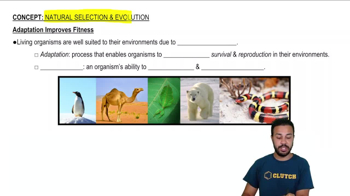
Adaptation Improves Fitness
18988
views
477
rank
1
comments
04:32
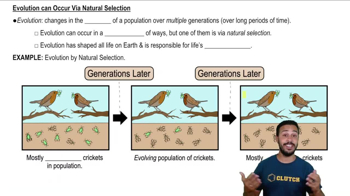
Evolution can Occur Via Natural Selection
13295
views
319
rank
2
comments
Termini in questo insieme (29)
Nascondere definizioni
How is genetic information preserved during DNA copying?
Genetic information is preserved by
base pairing
between A and T and between G and C across the two strands of the double helix.
What type of traits does natural selection act on?
Natural selection acts only on
heritable
traits.
What are the three fundamental domains of life identified by Carl Woese?
The most fundamental division among organisms is between
Archaea, Bacteria, and Eukarya
.
Which bond must be broken for water to vaporize?
Hydrogen bonds
must be broken for water to vaporize.
Why do ionic molecules dissolve in water?
Water is a
polar solvent
, so polar and ionic substances readily dissolve and dissociate in it.
How is household bleach characterized chemically?
Household bleach is a
base
with a
pH greater than 7
.
What is the defining characteristic of hydrolysis?
Hydrolysis breaks down polymers into monomers by using a
water molecule
.
What gives organic molecules their overall shape and chemical behavior?
Carbon atoms give organic molecules their
shape
, while H, N, and O atoms determine their
chemical behavior
.
Why is carbon important for the complexity of organic molecules?
The complexity and variety of organic molecules is due to the
chemical versatility of carbon atoms
.
What reactions involve the formation and breaking of water molecules?
Condensation reactions
form
water molecules; hydrolysis reactions
break
water molecules.
Why might silicon-based life be possible on other planets?
Silicon has the same number of valence electrons as carbon, allowing it to form the same number of
covalent bonds
.
Which functional group contains nitrogen?
The
amino group
contains nitrogen.
What determines molecular properties and chemical reactions in molecules?
The
functional group
determines molecular properties and reaction types.
What is the strongest to weakest order of chemical bonds?
Strongest to weakest:
ionic > covalent > hydrogen > Van der Waals
.
What does a low pH indicate about proton concentration?
Low pH means a
high concentration of protons (H+)
.
How many hydrogen bonds can a water molecule form?
A water molecule can form up to
4 hydrogen bonds
.
What roles does water play in the body?
Water transports nutrients and waste, maintains acid-base balance, and aids in thermoregulation.
What is a nonpolar covalent bond?
Two atoms share electrons
equally or almost equally
, e.g., C–H or O=O bonds.
What is a polar covalent bond?
Two atoms share electrons
unequally
, creating partial charges (δ− and δ+), e.g., O–H in water.
What is a hydrogen bond?
A
noncovalent attraction
between a δ+ hydrogen bonded to O, N, or F and a nearby δ− O, N, or F.
Why is water considered a polar molecule?
Oxygen attracts electrons more strongly than hydrogen, giving water a partial negative charge on O and partial positive charges on H.
What causes water's cohesion and adhesion?
Hydrogen bonding causes water molecules to stick to each other (
cohesion
) and to other substances (
adhesion
).
What is water's high specific heat important for?
Water's high specific heat helps organisms maintain
stable internal temperatures
.
Why does ice float on water?
Hydrogen bonds stabilize in ice, making it
less dense
than liquid water.
What is a solvent, solute, and solution?
Solvent dissolves substances, solute is dissolved, and solution is the homogeneous mixture of both.
What are hydrophilic, hydrophobic, and amphipathic molecules?
Hydrophilic dissolve in water, hydrophobic do not, amphipathic have both hydrophilic and hydrophobic regions.
What ions result from water ionization?
Water ionizes into
hydronium (H3O+)
and
hydroxide (OH-)
ions.
What does the pH scale measure?
The pH scale measures the concentration of hydrogen ions (H+) to indicate acidity or basicity.
How do acids, bases, and buffers affect pH?
Acids donate H+, bases donate OH- or accept H+, and buffers minimize pH changes by absorbing or releasing H+.
 IndietroIndietro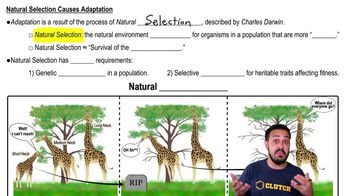
 07:48
07:48