 Indietro
Lab 7 Slide-Photosynthesis
 03:32

Termini in questo insieme (20)
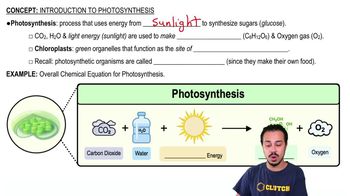
Photosynthesis is the process by which plants, some bacteria, and protists convert solar energy into chemical energy stored as sugar.
It provides the food supply for all living organisms either directly or indirectly and produces oxygen necessary for aerobic respiration.
Carbon dioxide (CO2) and water are converted into carbohydrates (food) and oxygen gas (O2) as a by-product.
It removes carbon dioxide, a greenhouse gas, helping to prevent global warming and regulates oxygen levels.
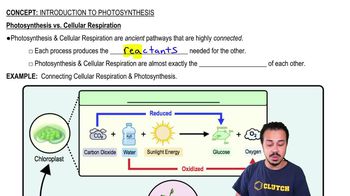
Oxygen is required by aerobic organisms to generate ATP during cellular respiration.
All plants, some bacteria, and some protists perform photosynthesis.
Solar energy is converted into chemical energy stored in sugar molecules.
Carbohydrates serve as a food source and energy storage for plants and other organisms.
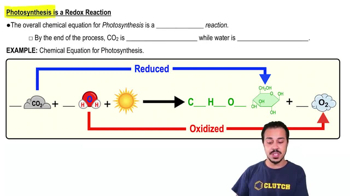
Carbon dioxide + water + light energy → carbohydrates + oxygen. Represented as \(6CO_2 + 6H_2O + light \rightarrow C_6H_{12}O_6 + 6O_2\).
It forms the base of the food chain by producing organic molecules used by herbivores and other consumers.
Photosynthesis produces oxygen and glucose used in cellular respiration to generate ATP.
Because it involves multiple steps converting CO2 and water into sugars and oxygen through enzymatic processes.
By removing CO2 from the atmosphere, photosynthesis reduces greenhouse gas levels and helps mitigate global warming.
Light energy is transformed into chemical energy stored in glucose molecules.
Oxygen gas (O2) is the by-product, essential for aerobic life and maintaining atmospheric oxygen levels.
They produce oxygen and organic matter, supporting food webs and maintaining atmospheric balance.
It provides oxygen necessary for aerobic respiration and energy production.
Carbon dioxide (CO2) from the atmosphere is fixed into carbohydrates.
By producing organic molecules that heterotrophs consume for energy and growth.
It sustains life by producing oxygen and organic compounds, and regulates atmospheric gases.