 Indietro
Macromolecules: Carbohydrates, Proteins, and Nucleic Acids
 03:08
03:08
Termini in questo insieme (20)
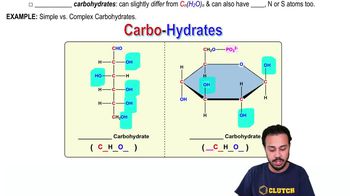
Monosaccharides are the monomers of carbohydrates, such as glucose and fructose.
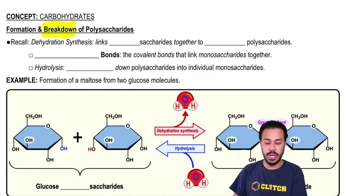
Glycosidic bonds link monosaccharides to form disaccharides and polysaccharides.
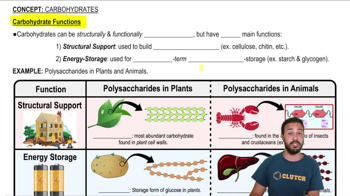
Carbohydrates provide energy storage, structural support, and serve as cell recognition molecules.
Amino acids are the monomers of proteins, linked by peptide bonds.
Peptide bonds connect amino acids to form polypeptides.
Primary (amino acid sequence), secondary (alpha helices and beta sheets), tertiary (3D folding), and quaternary (multiple polypeptide chains).
Proteins function as enzymes, structural components, transport molecules, and signaling molecules.
Nucleotides are the monomers of nucleic acids, composed of a sugar, phosphate group, and nitrogenous base.
Phosphodiester bonds link nucleotides to form the sugar-phosphate backbone.
DNA stores genetic information; RNA is involved in protein synthesis.
DNA contains deoxyribose sugar and thymine; RNA contains ribose sugar and uracil.
Hydrogen bonds form between complementary bases, stabilizing the double helix in DNA.
A polymer is a large molecule made of repeating monomer units linked by covalent bonds.
Dehydration synthesis removes water to form covalent bonds between monomers, building polymers.
Hydrolysis breaks polymers into monomers by adding water to break covalent bonds.
Carbohydrates, especially polysaccharides like starch and glycogen, store energy long-term.
The shape and structure of a protein, determined by its amino acid sequence, dictate its function.
Cellulose is a structural carbohydrate forming plant cell walls.
The sequence of nitrogenous bases encodes genetic information.
Monomers are single building blocks; polymers are chains of monomers linked together.