 Indietro
Meiosis and Genetic Variation - General Biology
 01:43

Termini in questo insieme (36)
A karyotype is the complete set of chromosomes in a cell, arranged and displayed in pairs.
Humans have 23 pairs of chromosomes.
The 22 non-sex chromosomes are called autosomes.
Homologous chromosomes are pairs of chromosomes that have the same genes at the same loci but may have different alleles.
A cell with paired chromosomes is called diploid.
The haploid number (n) represents the number of chromosomes in a gamete, which is half the diploid number.
Gametes (sperm and eggs) are haploid because they contain half the number of chromosomes of a diploid cell.
Human sex chromosomes are X and Y.
Different versions of a gene are called alleles.
Alleles arise from changes in DNA called mutations.
Sexual reproduction increases genetic variability by combining genetic material from two different gametes.
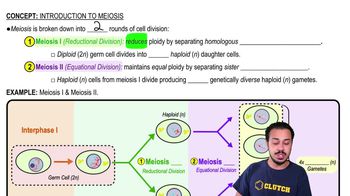
Meiosis consists of Meiosis I and Meiosis II.
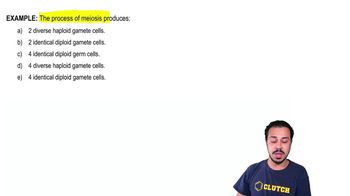
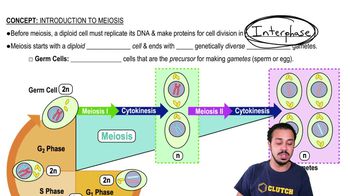
Meiosis produces four haploid daughter cells from one diploid cell.
DNA is replicated before the first meiotic division.
Meiosis I separates homologous chromosomes.
Meiosis II separates sister chromatids.
During prophase I, homologous chromosomes pair and exchange DNA in a process called crossing over.
The physical points where chromosomes exchange DNA are called chiasmata.
Crossing over creates new combinations of alleles called recombinant chromosomes.
This random alignment is called independent assortment.
During anaphase I, homologous chromosomes separate.
After telophase I, the two nuclei are haploid.
Meiosis II is most similar to mitosis.
During metaphase II, sister chromatids line up at the equator.
During anaphase II, sister chromatids split.
At the end of meiosis II, four haploid daughter cells are produced.
Random assortment occurs during metaphase I of meiosis.
Crossing over occurs during prophase I of meiosis.
Fertilization adds variability because it combines genetic material from two genetically unique gametes.
Errors in meiosis are called nondisjunction or chromosomal abnormalities.
Nondisjunction results in gametes with an abnormal number of chromosomes.
An example is Down syndrome, caused by trisomy 21.
Turner syndrome genotype is X0 (one X chromosome, no second sex chromosome).
Klinefelter syndrome genotype is XXY.
Trisomy X genotype is XXX.
Jacob syndrome genotype is XYY.