 Indietro
Mitochondria, Chloroplasts, and Peroxisomes in Eukaryotic Cells
 03:16
03:16
Termini in questo insieme (23)
Mitochondria are the sites of cellular respiration, using oxygen to generate ATP by extracting energy from sugars, fats, and other fuels.
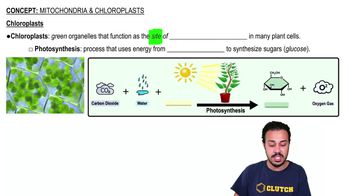
Chloroplasts capture solar energy and convert it to chemical energy by synthesizing sugars from CO2 and H2O through photosynthesis.
Peroxisomes are oxidative organelles that remove hydrogen atoms from substances and transfer them to oxygen, producing hydrogen peroxide as a byproduct.
Cells may have one large mitochondrion or hundreds to thousands of smaller ones, correlating with the cell's aerobic metabolic activity.
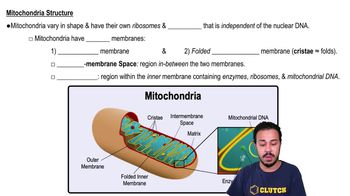
Mitochondria have an outer smooth membrane and a highly folded inner membrane forming cristae, creating the intermembrane space and the mitochondrial matrix.
The matrix contains mitochondrial DNA, ribosomes, and enzymes that catalyze steps of cellular respiration.
Cristae increase the surface area of the inner membrane, enhancing the capacity for ATP generation.
Mitochondria move, change shape, fuse with one another, and divide within the cell.
Chloroplasts contain the green pigment chlorophyll and enzymes for photosynthetic sugar production.
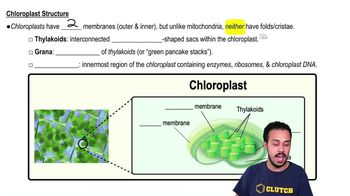
Chloroplasts have an inner membrane enclosing the stroma, which contains DNA, ribosomes, and enzymes, and thylakoids where light energy is converted to chemical energy.
Thylakoids are flattened sacs; stacks of thylakoids form grana, which are sites of the light reactions of photosynthesis.
Chloroplasts have three main compartments: intermembrane space, stroma, and thylakoid space.
Chloroplasts are mobile, change shape, and move along the cytoskeleton within the cell.
Chloroplasts belong to the plastid family, which includes amyloplasts (store starch) and chromoplasts (store pigments).
Peroxisomes break down fatty acids into smaller molecules used as fuel for respiration.
In the liver, peroxisomes detoxify alcohol and other harmful compounds by removing hydrogen atoms and combining them with oxygen to form hydrogen peroxide.
Glyoxysomes in fat-storing tissues of plant seeds convert fatty acids to sugar to nourish the emerging seedling.
The folds of the mitochondrial inner membrane are called cristae.
Mitochondrion is common to both plant and animal cells.
Cyanide binds in the mitochondria, inhibiting molecules involved in ATP production.
Both contain their own DNA and reproduce independently within the cell.
Hydrogen atoms are combined with oxygen molecules to generate hydrogen peroxide in peroxisomes.
Glyoxysomes break down fatty acids into sugar in plant cells.