 Indietro
Photosynthesis and Calvin Cycle Basics
 03:32

Termini in questo insieme (20)
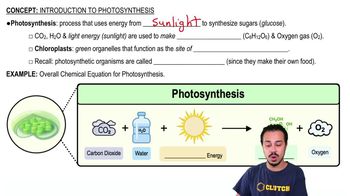
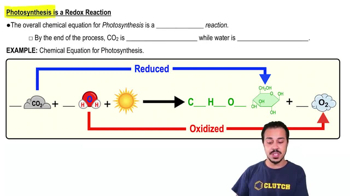
Photosynthesis is the process by which green plants and some other organisms use sunlight to synthesize foods from carbon dioxide and water.
Light reactions occur in the thylakoid membranes of chloroplasts.
The light reactions produce ATP, NADPH, and release Oxygen (O2) as a byproduct.
Chlorophyll absorbs light energy, which excites electrons to start the light reactions.
The Calvin cycle is the set of light-independent reactions that use ATP and NADPH to fix carbon dioxide into organic molecules.
The Calvin cycle occurs in the stroma of chloroplasts.
The first step is carbon fixation, where CO2 is attached to ribulose bisphosphate (RuBP) by the enzyme Rubisco.
Rubisco catalyzes the fixation of CO2 to RuBP in the Calvin cycle.
The Calvin cycle produces G3P (glyceraldehyde-3-phosphate), which can be used to form glucose and other carbohydrates.
ATP provides energy and NADPH provides reducing power to convert 3-PGA into G3P.
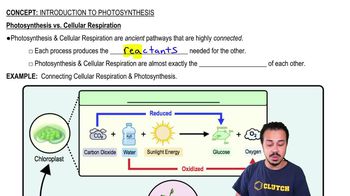
Light reactions generate ATP and NADPH which are used by the Calvin cycle to fix carbon and synthesize sugars.
Oxygen is released as a byproduct when water molecules are split during the light reactions.
Ribulose bisphosphate (RuBP) acts as the CO2 acceptor molecule.
G3P is a 3-carbon sugar that serves as the building block for glucose and other carbohydrates.
It takes 3 turns of the Calvin cycle to fix 3 CO2 molecules and produce one G3P molecule.
Most G3P is used to regenerate RuBP to keep the cycle going.
Photophosphorylation is the process of generating ATP from ADP and phosphate using the energy of sunlight during the light reactions.
NADP+ acts as the final electron acceptor, becoming reduced to NADPH.
Electrons come from the splitting of water molecules during photolysis.
Because it does not require light directly but depends on ATP and NADPH produced by the light reactions.