 Indietro
Photosynthesis and Carbon Fixation in General Biology
 03:32

Termini in questo insieme (21)
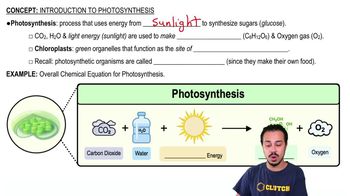
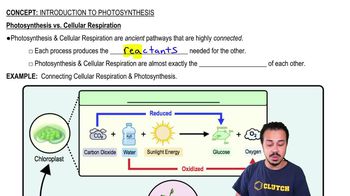
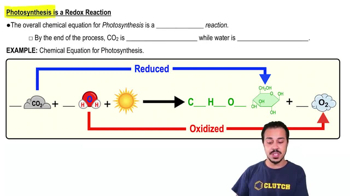
Photosynthesis is a biological process that converts solar energy into chemical energy, using sunlight, CO2, and water to produce oxygen and carbohydrates.
Photosynthesis consists of light-capturing reactions and the Calvin cycle.
Light-capturing reactions occur in the thylakoid membranes of chloroplasts.
The Calvin cycle uses ATP and NADPH to fix carbon dioxide and synthesize carbohydrates in the stroma.
Thylakoids are flattened membranes where light reactions occur; grana are stacks of thylakoids.
Chlorophyll is the most common pigment; it absorbs mainly red and blue light and reflects green.
Carotenoids are accessory pigments that absorb blue and green light, reflect yellow/orange/red, and protect chlorophyll from damage.
Electrons are excited to higher energy states; energy can be transferred as heat, light (fluorescence), or used in photosynthesis.
A photosystem is a complex of pigments and proteins that captures light energy and transfers it to a reaction center.
Photosystem II captures light, excites electrons, splits water to produce O2, and passes electrons to the electron transport chain.
Photophosphorylation is ATP production driven by light energy via the proton gradient generated in the electron transport chain.
Photosystem I absorbs light, excites electrons, and transfers them to NADP+ to form NADPH for the Calvin cycle.
The Z scheme describes linear electron flow from water through Photosystem II and I to NADP+, producing O2, ATP, and NADPH.
Cyclic electron flow involves only Photosystem I, recycling electrons to produce ATP without NADPH or O2.
Stomata are pores that regulate gas exchange, allowing CO2 in and O2 out while controlling water loss.
1. Carbon fixation, 2. Reduction, 3. Regeneration of RuBP.
Rubisco catalyzes CO2 fixation by reacting CO2 with RuBP to form 3-phosphoglycerate.
Photorespiration occurs when Rubisco reacts with O2 instead of CO2, consuming energy and releasing CO2, reducing photosynthetic efficiency.
C4 plants spatially separate carbon fixation and the Calvin cycle, using PEP carboxylase in mesophyll cells and Rubisco in bundle sheath cells.
CAM plants temporally separate carbon fixation and the Calvin cycle by fixing CO2 at night and using it during the day.
Oxygenic photosynthesis splits water to produce O2; anoxygenic photosynthesis uses other electron donors and does not produce O2.