 Indietro
Photosynthesis and Cellular Respiration
 01:53

Termini in questo insieme (20)
Photosynthesis is the process by which green plants and some other organisms use sunlight to synthesize foods from carbon dioxide and water, producing oxygen as a byproduct.
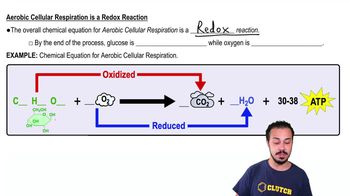
Cellular respiration is the process by which cells convert glucose and oxygen into energy (ATP), carbon dioxide, and water.
The main reactants are carbon dioxide (CO2) and water (H2O).
The main products are glucose (C6H12O6) and oxygen (O2).
The main reactants are glucose (C6H12O6) and oxygen (O2).
The main products are ATP (energy), carbon dioxide (CO2), and water (H2O).
\(6CO_2 + 6H_2O + light \rightarrow C_6H_{12}O_6 + 6O_2\)
\(C_6H_{12}O_6 + 6O_2 \rightarrow 6CO_2 + 6H_2O + energy (ATP)\)
Photosynthesis occurs in the chloroplasts of plant cells.
Cellular respiration mainly occurs in the mitochondria of eukaryotic cells.
Chlorophyll absorbs light energy, which drives the photosynthesis process.
ATP (adenosine triphosphate) is the main energy currency of the cell, providing energy for cellular activities.
They are complementary processes: photosynthesis stores energy in glucose, while cellular respiration releases energy from glucose.
The light-dependent reaction uses light energy to produce ATP and NADPH and releases oxygen from water.
The Calvin cycle uses ATP and NADPH to convert CO2 into glucose.
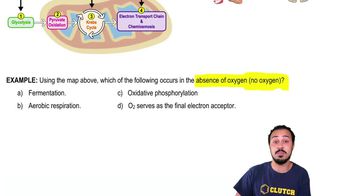
Oxygen (O2) is the final electron acceptor in the electron transport chain.
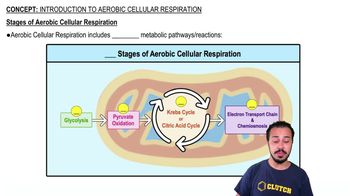
Glycolysis, Krebs cycle (citric acid cycle), and electron transport chain.
Glycolysis occurs in the cytoplasm of the cell.
The net gain is 2 ATP molecules per glucose molecule.
The Krebs cycle produces electron carriers NADH and FADH2 for the electron transport chain.