 Indietro
Scientific Method and Research Designs in General Biology
 01:35
01:35
Termini in questo insieme (27)
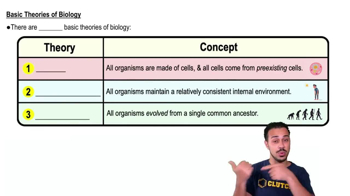
The primary goal of science is to help us understand reality.
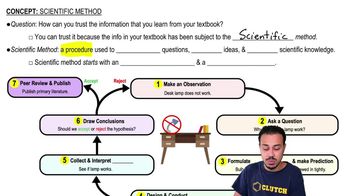
The objective (unbiased) means of gathering information is termed the scientific method.
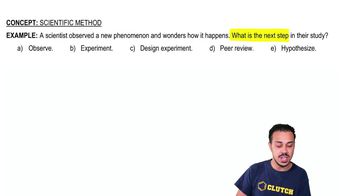
1. Observe 2. Question 3. Explain 4. Test
The most reliable research design to obtain objective and truthful information is the experimental design.
To establish cause and effect by controlling variables except the one being studied.
The variable that the scientist studies; it is the variable of cause.
The variable used to measure the effect of the independent variable; the variable of effect.
Other factors that may impact results but are not controlled; ideally should be minimized or controlled.
Two groups compared: one exposed to the independent variable (experimental group) and one not exposed (control group).
If results differ significantly and extraneous variables are controlled, differences can be attributed to the independent variable.
Creatine supplementation is the independent variable.
1RM bench press test is the dependent variable measuring strength.
Nutrition, motivation, fitness level, sleep, age, etc. are extraneous variables.
Studies that establish a level of association or correlation between two variables without controlling variables or proving cause and effect.
r = 1.0 is perfect correlation; r = 0.95 strong; r = 0.45 weak association.
Used as a screen to determine if a scientific experiment is warranted to test cause and effect.
Basic research aims for theoretical knowledge; applied research aims to solve practical problems.
A theory explains why an effect occurs and predicts outcomes in untested situations.
Theories are explanations tested and revised; laws are consistent results observed repeatedly.
Research that describes situations without explaining or predicting, often used to measure behaviors or patterns.
Surveys require brevity, clarity, anonymity, voluntary participation, and clear purpose for effective data collection.
Cross-sectional studies multiple ages simultaneously; longitudinal studies the same group over time.
Blind: subjects unaware of group; Double-blind: both subjects and researchers unaware, reducing bias.
Randomizing subjects helps prevent selection bias and ensures sample represents the population.
Peer review involves expert evaluation before publication; meta-analysis statistically combines results from multiple studies.
Journals tend to publish positive results more than negative, potentially suppressing contradictory findings.
Dr. Wakefield's fraudulent study linking vaccines to autism caused public harm and was retracted; his license was revoked.