 Indietro
sep 16
 07:48

Termini in questo insieme (22)
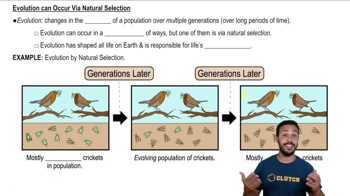
Evolution is the process of change that has transformed life on Earth from its earliest forms to the vast array of organisms living today.
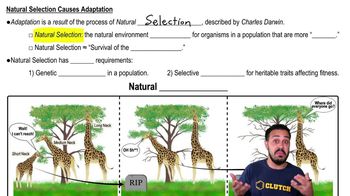
Charles Darwin suggested natural selection as the mechanism of evolution.
1. Individual variation: Individuals vary in traits.
2. Overproduction of offspring: More offspring are produced than the environment can support.
1. Unequal reproductive success: Individuals with traits best suited to the environment survive better.
2. Accumulation of favorable traits: These traits increase in frequency over generations.
A phylogenetic tree is a family tree for all organisms showing evolutionary relationships and common ancestors.
Artificial selection is when humans modify organisms by choosing which individuals reproduce, often using biotechnology.
Genetic information is encoded in DNA, which directs the production of proteins through gene expression. t-a, g-c
DNA consists of two strands forming a double helix, made of four nucleotides: Adenine, Thymine, Cytosine, and Guanine.
Nucleotides pair specifically: Adenine (A) with Thymine (T), and Cytosine (C) with Guanine (G).
The genetic code is the chemical language of nucleotides and genes that translates DNA into proteins.
2 types of cell signalling
External stimuli: light, sound, temperature, chemicals
Internal stimuli: food in your stomach, sugar levels and oxygen levels in your blood
The stimulus is received by receptors on cell surfaces and influences their behaviour
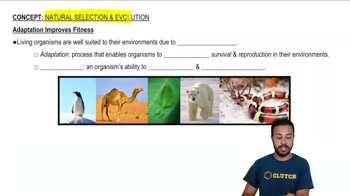
Structure refers to shape, and function refers to what something does; organisms with structures suited to their functions survive better.
The false thumb of a panda helps it grasp bamboo, showing how structure supports function.
The sun provides energy that plants convert into chemical energy through photosynthesis.
Energy flows from the sun to producers (plants), then to consumers (herbivores and carnivores), and is eventually lost as heat.
Matter cycles from air and soil to producers, consumers, decomposers, and back to the environment.
Decomposers like fungi and bacteria recycle dead material and wastes into simple molecules usable by producers.
A system is a combination of components whose interactions produce complex behaviors greater than the sum of parts.
Systems biology modelling the behaviour of biological systems by analyzing interactions among their parts, often using math and computer simulations.
High blood glucose triggers pancreatic cells to release insulin, which stimulates cells to take up glucose, lowering blood sugar.
what is unintensional evolution
Unintentional effects wehave had on evolution•
Loss of species due to habitat loss• Antibiotic resistant bacteria• Pesticide resistant insects
what is a system
A combination of small components•
The whole is greater than the sum of its parts•
Systems can be small or large•
Systems need to communicate with each other•
A small disruption can affect the entire system