 Indietro
sep 18
 02:13

Termini in questo insieme (22)
Matter is anything that occupies space and has mass.
3 physical states: solid, liquid, gas
An element is a substance that cannot be broken down into other substances by normal chemical means.
A compound is a substance consisting of two or more elements combined in a fixed ratio, with characteristics different from its elements.
Oxygen (O), Carbon (C), Hydrogen (H), Nitrogen (N), Phosphorus (P), and Calcium (Ca).
Trace elements are elements required in very small amounts by organisms, such as boron, chromium, cobalt, copper, fluorine, iodine, iron, manganese, molybdenum, selenium, silicon, tin, vanadium, and zinc.
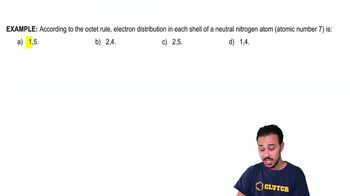
Protons (positive charge), electrons (negative charge), and neutrons (neutral charge).
The atomic number is the number of protons in an atom.
The mass number is the sum of the number of protons and neutrons in the nucleus.
Isotopes are atoms of the same element with the same number of protons but different numbers of neutrons.
A radioactive isotope has an unstable nucleus that decays spontaneously, releasing particles and energy (radiation).
C12 and C13 are stable meanwhile C14 is not
They act as radioactive tracers for imaging and treatment, such as radioactive iodine targeting thyroid cancer.
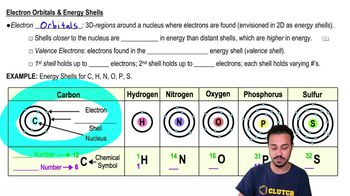
The distribution of electrons, especially those in the outermost shell, determines an atom's chemical properties.
The valence shell is the outermost electron shell of an atom.
Valence electrons are the electrons found in the valence shell, involved in chemical bonding.
Inert atoms have complete outer electron shells and do not interact with other atoms.
Atoms can give up, accept, or share electrons to complete their valence shells.
An ionic bond is formed by the transfer of electrons from one atom to another.
A covalent bond is formed by the sharing of electrons between atoms.
Electronegativity is an atom's attraction for shared electrons in a covalent bond.
Nonpolar covalent bonds share electrons equally; polar covalent bonds share electrons unequally, causing partial charges.
how many components is most living things made of
at least 3 or 4
how many elements and plants need
humans 25
plants 17