Indietro

The Role of Biology in Psychology - Brain and Nervous System

I pulsanti di controllo sono stati cambiati in modalità "navigazione".
1/20
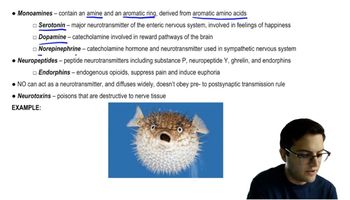
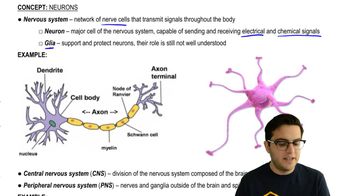
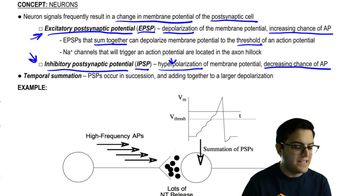
  • What is the basic unit of the nervous system?

    Neuron: receives, integrates, and transmits information; forms networks and communicates non-randomly.
  • Name the three main brain divisions of the brain and their primary functions.


    Forebrain: motivation, emotion, complex thought; Midbrain: movement; Hindbrain: survival functions, movement.
  • What role does the thalamus play in the brain?

    Acts as a sensory gateway, organizing sensory information for sight, sound, touch, and taste.
  • What functions are regulated by the hypothalamus?

    Regulates hunger, temperature, and motivational behaviors.
  • What is the hippocampus responsible for?

    Formation of memories and spatial navigation.
  • What is the function of the amygdala?

    Detects and responds to threats and associates emotional responses with experiences.
  • What are the four lobes of the cerebral cortex and their primary functions?

    Frontal lobe: complex thought, planning, movement; Parietal lobe: touch, spatial relations; Occipital lobe: vision; Temporal lobe: hearing, memory.
  • What is the role of the primary motor cortex?

    Controls voluntary movements of the body.
  • What does the primary somatosensory cortex process?

    Processes touch and sensory information from the body.
  • What is hemineglect and which brain lobe is involved?

    A condition caused by damage to the right parietal lobe leading to neglect of one side of space.
  • What percentage of the brain does the prefrontal cortex occupy and what is its role?

    Occupies ~30% of the brain; involved in attention, self-control, and social processes.
  • What are the main functions of the left hemisphere of the brain?

    Handles logical thoughts, language, controls movements of the right side of the body, and processes images from the right visual field.
  • What are the main functions of the right hemisphere of the brain?

    Responsible for spatial relationships, controls movements of the left side of the body, and processes images from the left visual field.
  • What are the two main divisions of the peripheral nervous system?

    Somatic nervous system: controls voluntary movement and sensory input; Autonomic nervous system: controls involuntary functions like heart rate and digestion.
  • What are the two branches of the autonomic nervous system and their effects?

    Sympathetic: prepares body for action (increases heart rate, dilates pupils); Parasympathetic: returns body to resting state (decreases heart rate, constricts pupils).
  • What is the endocrine system's role in behavior?

    Uses hormones released by glands to influence thoughts and actions via the bloodstream.
  • Define hormones in the context of the endocrine system.

    Chemical substances released from endocrine glands that travel through the bloodstream to target tissues, influencing their function.
  • How do nature and nurture affect the brain?

    Nature involves inherited genes; nurture involves environment, learning, and culture. Both interact to shape brain function and behavior.
  • What is epigenetics?

    The study of how environmental factors affect gene expression without changing the DNA sequence.
  • What is brain plasticity?

    The brain's ability to change by growing new neurons, changing neural connections, and reorganizing in response to biological and environmental influences.