

Ch. 44 - Osmoregulation and Excretion
Campbell - Campbell Biology 12th Edition
Urry12th EditionCampbell BiologyISBN: 9785794169850Non è quello che usi tu?Cambia libro di testo
Capitolo 44, Problema 3

Which of the following animals generally has the lowest volume of urine production?
a. Vampire bat
b. Salmon in fresh water
c. Marine bony fish
d. Freshwater flatworm

Guida verificata passo dopo passo
1
Understand the concept of osmoregulation, which is the process by which animals control the concentration of water and salts in their bodies to maintain homeostasis.
Consider the environment in which each animal lives, as this affects their osmoregulatory strategies. Marine animals often face different challenges compared to freshwater animals.
Marine bony fish live in a saltwater environment, where the concentration of salt is higher outside their bodies than inside. To prevent dehydration, they drink seawater and excrete the excess salts through their gills and produce very little urine.
Freshwater animals, like salmon in fresh water and freshwater flatworms, live in environments where the concentration of water is higher outside their bodies. They tend to excrete large amounts of dilute urine to get rid of excess water.
Vampire bats, which feed on blood, have a diet that influences their water balance differently, but they are not typically associated with minimal urine production compared to marine bony fish.

Risposta video verificata per un problema simile:

Questa soluzione video è stata consigliata dai nostri tutor come utile per risolvere questo problema.
Durata del video:
1m

Concetti chiave

Ecco i concetti essenziali che devi comprendere per rispondere correttamente alla domanda.

Osmoregulation

Osmoregulation is the process by which animals maintain the balance of water and salts in their bodies to ensure proper cellular function. Marine bony fish, for example, live in a high-salinity environment and must excrete excess salts while conserving water, leading to low urine production. Understanding osmoregulation helps explain how different animals adapt to their environments.
Video consigliato:
07:16
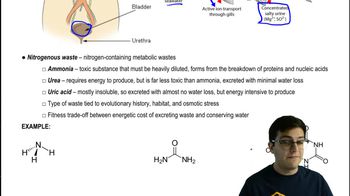
Osmoregulation and Nitrogenous Waste

Habitat and Water Availability

The habitat of an animal significantly influences its water conservation strategies. Marine bony fish live in saltwater, where water is scarce due to high salinity, necessitating adaptations to minimize water loss. In contrast, freshwater animals like salmon and flatworms have abundant water, affecting their urine production differently.
Video consigliato:
01:54
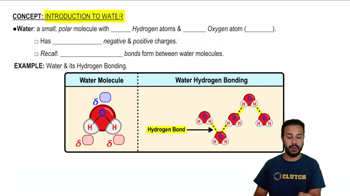
Introduction to Water

Excretory System Adaptations

Animals have evolved various excretory system adaptations to manage water and salt balance. Marine bony fish possess specialized kidneys and gills that help excrete salt and conserve water, resulting in minimal urine output. These adaptations are crucial for survival in their saline environment, contrasting with freshwater species that excrete more dilute urine.
Video consigliato:
05:50
Adaptive Immune Response
Pratica correlata