1. All living things are composed of cells. 2. All cells come from pre-existing cells.
What is the difference between magnification and resolution in microscopy?
Magnification is the increase in image size of an object. Resolution is the clarity of the image, or the ability to distinguish two close objects as separate.
Why are cells generally small in size?
Small size provides a large surface-to-volume ratio, facilitating efficient exchange of materials across the plasma membrane.
Describe the structure of the plasma membrane.
A phospholipid bilayer with embedded proteins; hydrophilic heads face outward, hydrophobic tails inward; proteins form channels and pumps for molecule transport.
What are the key differences between prokaryotic and eukaryotic cells?
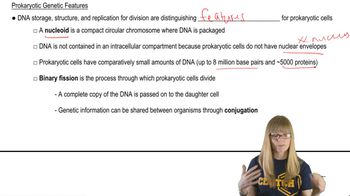
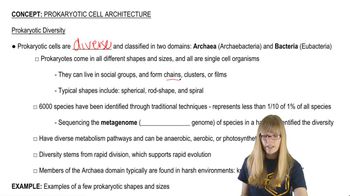
Prokaryotes lack a membrane-enclosed nucleus and organelles; eukaryotes have a nucleus and membrane-bound organelles.
Name the four basic functional groups of eukaryotic cell organelles.
1. Genetic control (nucleus, ribosomes) 2. Manufacture, distribution, breakdown (ER, Golgi, lysosomes, vacuoles, peroxisomes) 3. Energy processing (mitochondria, chloroplasts) 4. Structural support and communication (cytoskeleton, plasma membrane, cell wall).
What is the function of the nucleus?
Houses DNA which directs protein synthesis via mRNA; nucleolus assembles ribosome subunits.
What are ribosomes and their function?
Composed of rRNA and proteins; synthesize proteins according to DNA instructions; found free or bound to ER.
What roles do the smooth and rough endoplasmic reticulum play?
Smooth ER synthesizes lipids and detoxifies; Rough ER produces membranes and proteins with ribosomes on its surface.
What is the function of the Golgi apparatus?
Modifies, sorts, and ships products from the ER to other organelles or the cell surface.
What are lysosomes and their role?
Membrane-bound organelles containing enzymes that digest ingested substances and damaged organelles.
What functions do vacuoles serve in cells?
Large vesicles for storage, waste disposal, and growth; contractile vacuoles in protists expel excess water.
Describe the structure and function of mitochondria.
Double membrane organelle; site of cellular respiration; contains intermembrane space and matrix with DNA and enzymes.
What is the role of chloroplasts?
Organelles in plants and algae that convert solar energy to chemical energy via photosynthesis.
What does the endosymbiont theory propose about mitochondria and chloroplasts?
They evolved from small prokaryotes that began living inside larger host cells.
What are the main components of the cytoskeleton and their functions?
Microfilaments, intermediate filaments, and microtubules; maintain cell shape, anchor organelles, enable movement and muscle contraction.
How do cilia and flagella move?
Made of microtubules in a '9 + 2' arrangement; flagella move with a whip-like motion; cilia move like oars.
What is the extracellular matrix (ECM) and its function?
A network secreted by animal cells that binds cells, supports the plasma membrane, and communicates with the cytoskeleton.
Name and describe the three types of cell junctions in animal tissues.
Tight junctions form leakproof sheets; anchoring junctions rivet cells into tissues; gap junctions allow ion and molecule flow between cells.
What is the plant cell wall composed of and its function?
Primarily cellulose; provides protection and skeletal support to keep plants upright.
What are plasmodesmata in plant cells?
Cell junctions that allow plant cells to share water, nutrients, and chemical signals.
 Indietro
 02:23