Skip to main content
Cell Biology
Il mio corso
Impara
Preparazione agli esami
AI Tutor
Guide di studio
Flashcard
Esplora
Prova l'app
Il mio corso
Impara
Preparazione agli esami
AI Tutor
Guide di studio
Flashcard
Esplora
Prova l'app
Indietro
Cell Organelles and Their Functions
Puoi toccare per girare la carta.
What is the primary function of the nucleus in a cell?
Puoi toccare per girare la carta.
👆
What is the primary function of the nucleus in a cell?
The
nucleus
stores the cell's genetic material (DNA) and controls cellular activities by regulating gene expression.
Avanzamenti del tracciato
I pulsanti di controllo sono stati cambiati in modalità "navigazione".
1/20
Video consigliati
VideoThumbView.guidedCourse
03:05
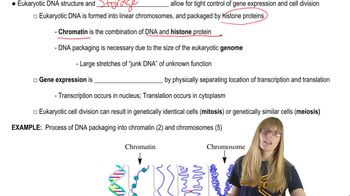
Eukaryotic Genetics
600
views
6
rank
VideoThumbView.guidedCourse
03:00
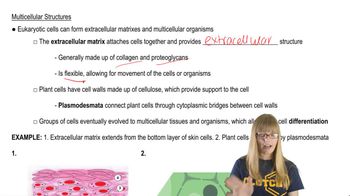
Multicellular Structures
511
views
4
rank
VideoThumbView.guidedCourse
03:10
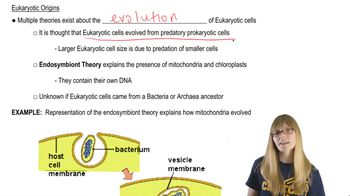
Eukaryotic Origins
636
views
6
rank
Termini in questo insieme (20)
Nascondere definizioni
What is the primary function of the nucleus in a cell?
The
nucleus
stores the cell's genetic material (DNA) and controls cellular activities by regulating gene expression.
What role do mitochondria play in the cell?
Mitochondria
are the powerhouse of the cell, producing ATP through cellular respiration to supply energy.
Describe the function of the rough endoplasmic reticulum (RER).
The
rough ER
synthesizes and processes proteins, especially those destined for secretion or membrane insertion, due to ribosomes on its surface.
What is the smooth endoplasmic reticulum (SER) responsible for?
The
smooth ER
synthesizes lipids, metabolizes carbohydrates, and detoxifies drugs and poisons.
How does the Golgi apparatus modify and transport proteins?
The
Golgi apparatus
modifies, sorts, and packages proteins and lipids received from the ER for secretion or delivery to other organelles.
What is the function of lysosomes in the cell?
Lysosomes
contain digestive enzymes that break down waste materials, cellular debris, and foreign substances.
Explain the role of peroxisomes.
Peroxisomes
detoxify harmful substances and break down fatty acids through oxidation reactions.
What is the cytoskeleton and its main components?
The
cytoskeleton
provides structural support and facilitates cell movement; it includes microtubules, microfilaments, and intermediate filaments.
How do ribosomes contribute to cell function?
Ribosomes
are the sites of protein synthesis, translating mRNA into polypeptide chains.
What is the function of the plasma membrane?
The
plasma membrane
controls the movement of substances in and out of the cell and facilitates communication with the environment.
Describe the role of the cell wall in plant cells.
The
cell wall
provides rigid structural support and protection to plant cells and helps maintain cell shape.
What is the function of chloroplasts in plant cells?
Chloroplasts
conduct photosynthesis, converting light energy into chemical energy stored as glucose.
How do vacuoles function in plant cells?
Vacuoles
store nutrients, waste products, and help maintain turgor pressure for structural support.
How are the rough ER and Golgi apparatus connected in protein processing?
Proteins synthesized in the
rough ER
are transported to the
Golgi apparatus
for further modification, sorting, and packaging.
What is the relationship between mitochondria and energy metabolism?
Mitochondria
convert glucose and oxygen into ATP, the cell's energy currency, through aerobic respiration.
How do lysosomes and peroxisomes differ in their digestive roles?
Lysosomes
digest macromolecules and cellular debris, while
peroxisomes
break down fatty acids and detoxify harmful substances.
What role does the cytoskeleton play in intracellular transport?
The
cytoskeleton
provides tracks along which vesicles and organelles are transported within the cell.
How do ribosomes differ when free in the cytoplasm versus bound to the rough ER?
Free
ribosomes
synthesize proteins for use inside the cell, while bound ribosomes produce proteins for secretion or membrane insertion.
What is the significance of the plasma membrane's selective permeability?
Selective permeability allows the
plasma membrane
to regulate the internal environment by controlling substance entry and exit.
How do chloroplasts and mitochondria differ in energy conversion?
Chloroplasts
convert light energy into chemical energy via photosynthesis, while
mitochondria
convert chemical energy into ATP through respiration.
 IndietroIndietro
 03:05