 Indietro
Cell Transport in Cell Biology
 03:37

Termini in questo insieme (17)
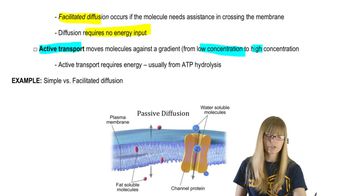
Movement of molecules across the cell membrane without energy, from high to low concentration.
Movement of molecules across the cell membrane using energy (ATP), from low to high concentration.
Passive transport where molecules move from high to low concentration until equilibrium is reached.
Passive transport using protein channels to help molecules move from high to low concentration.
The difference in the concentration of molecules across a space or membrane.
Energy molecule used to move molecules against their concentration gradient in active transport.
Passive transport of water across a semipermeable membrane from low to high solute concentration.
Solution with higher solute concentration than the cell, causing the cell to shrink.
Solution with lower solute concentration than the cell, causing the cell to swell or grow.
Solution with equal solute concentration to the cell, maintaining cell size.
Active transport process where the cell membrane engulfs material to bring it inside the cell.
Active transport process where vesicles fuse with the membrane to release substances outside the cell.
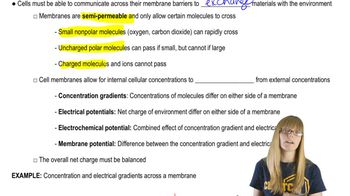
Membrane that allows some molecules to pass through but blocks others.
Membrane protein that uses energy to move molecules against their concentration gradient.
Facilitated diffusion requires protein channels, simple diffusion does not.
Cell's ability to maintain a stable internal environment despite external changes.
Small membrane-bound sac that transports materials within or outside the cell.