 Indietro
Financial Accounting Basics

 02:35
02:35
Termini in questo insieme (20)
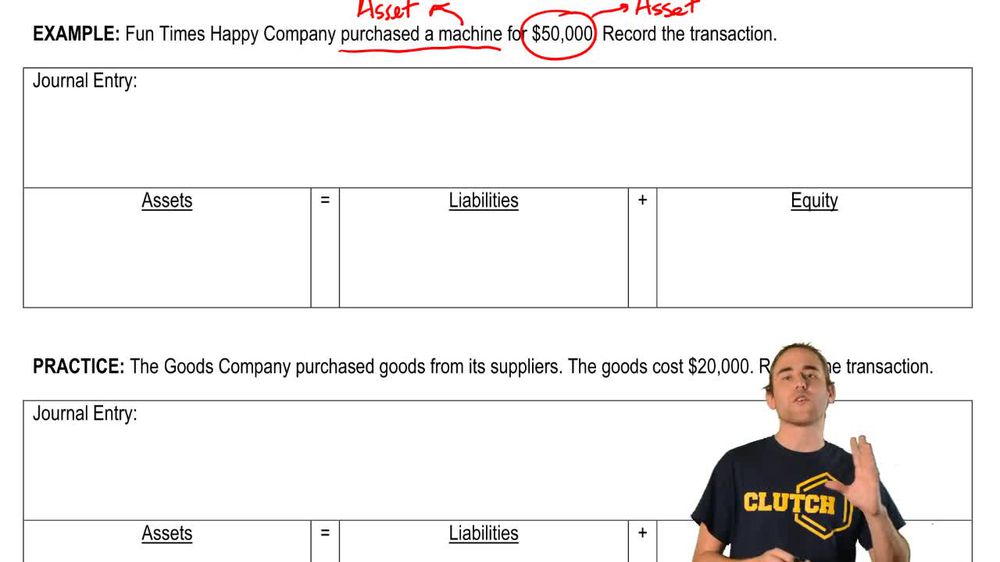
A general entry records a financial transaction in the accounting system, showing debits and credits for accounts affected.
A T-account visually represents an account's debits on the left and credits on the right to track changes.
A trial balance lists all accounts and their balances to verify that total debits equal total credits.
The income statement reports revenues and expenses to calculate net income or loss over a period.
Retained earnings are the cumulative net income kept in the business after dividends are paid.
The balance sheet shows a company’s assets, liabilities, and equity at a specific point in time.
Debits increase assets and expenses, while credits increase liabilities, equity, and revenue.
Total debits must equal total credits in the trial balance.
Net income increases retained earnings, while a net loss decreases it.
Assets, liabilities, and equity make up the balance sheet.
The accounting equation is \(\text{Assets} = \text{Liabilities} + \text{Equity}\).
The income statement covers a specific period of time, such as a month or year.
It ensures that debits and credits are balanced, reducing errors before financial statements are made.
Retained earnings is an equity account representing accumulated profits.
Expenses reduce net income on the income statement.
Net income from the income statement increases retained earnings on the balance sheet.
A T-account has the account name on top, debits on the left, and credits on the right.
A debit increases the balance of an asset account.
A credit increases the balance of a liability account.
It shows the portion of net income retained in the business rather than distributed as dividends.