 Indietro
Financial Accounting Exam 2 Key Concepts
 08:00

Termini in questo insieme (22)
Offer sales discounts, send timely invoices, follow up on overdue accounts, and encourage early payments.
Credit sales increase accounts receivable; collections decrease it; write-offs reduce both accounts receivable and allowance for doubtful accounts.
Discount amount reduces cash received; debit cash for net amount, debit sales discounts for discount given, and credit accounts receivable for full amount.
Allowance for Doubtful Accounts is a contra asset account that shows estimated uncollectible receivables.
A contra asset account has a credit normal balance, opposite to regular asset accounts.
Percent-of-sales estimates bad debt expense based on sales; Aging method estimates ending allowance based on receivables age.
Bad debt expense is recorded to adjust allowance to desired ending balance; use percent-of-sales or aging method for calculation.
Given A/R \$5,000, Allowance \(300, write-off \)25, Net A/R = \(5,000 - (\)300 - \$25) = \$4,725.
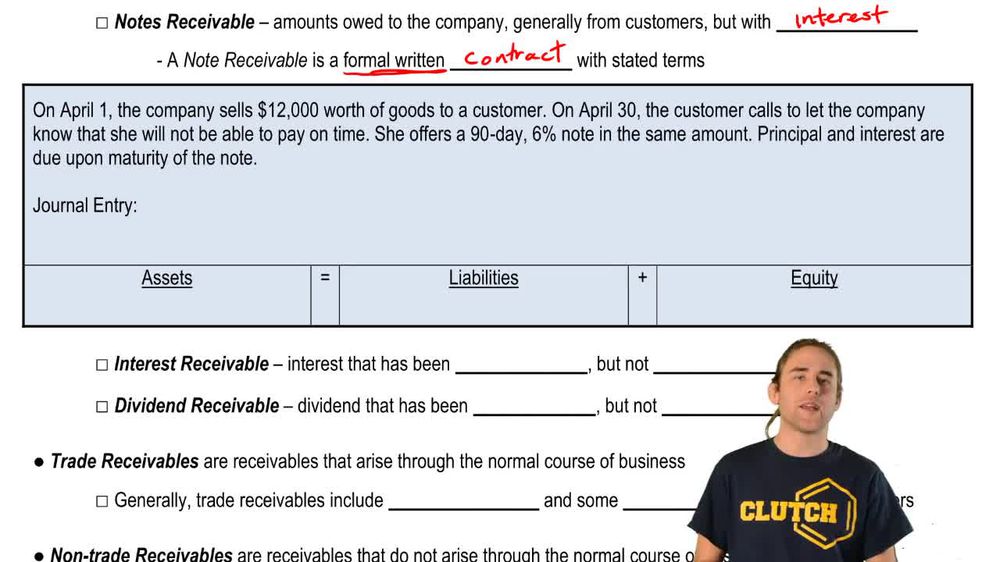
Maturity value = Principal + Interest earned over the note period.
Interest = Principal × Rate × Time (in years or fraction of year).
The lender holds the note receivable and records interest revenue; the borrower records note payable and interest expense.
COGS = Beginning Inventory + Purchases - Ending Inventory.
Average Cost, FIFO (first-in, first-out), and LIFO (last-in, first-out) methods affect COGS and ending inventory differently.
Gross Profit % = (Revenue - COGS) ÷ Revenue × 100.
In rising prices, LIFO results in higher COGS and lower net income; FIFO results in higher ending inventory and net income.
Allocate total cost to items based on their relative appraisal values.
Depreciation expense = (Cost - Salvage value) ÷ Useful life (years).
Depreciation expense = (Cost - Salvage value) ÷ Total estimated units × Units produced in period.
Depreciation = 2 × Straight-line rate × Book value at beginning of year; no salvage value deducted initially.
Book value = Cost - Accumulated depreciation.
Gain or loss = Proceeds from sale - Book value of asset at disposal.
Capitalize if it extends asset life or improves value; expense if it maintains normal operation or repairs.