Skip to main content
General Chemistry
Il mio corso
Impara
Preparazione agli esami
AI Tutor
Guide di studio
Soluzioni per libri di testo
Flashcard
Esplora
Prova l'app
Il mio corso
Impara
Preparazione agli esami
AI Tutor
Guide di studio
Soluzioni per libri di testo
Flashcard
Esplora
Prova l'app
Indietro
General Chemistry: Molecules and Compounds
Puoi toccare per girare la carta.
What are the two main types of chemical bonds?
Puoi toccare per girare la carta.
👆
What are the two main types of chemical bonds?
Ionic bonds
formed by electron transfer between metals and nonmetals, and
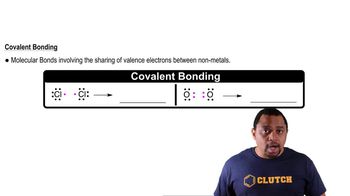
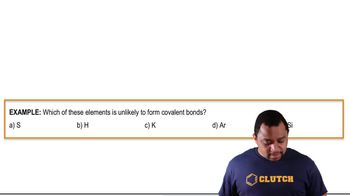
covalent bonds
formed by electron sharing between nonmetals.
Avanzamenti del tracciato
I pulsanti di controllo sono stati cambiati in modalità "navigazione".
1/28
Video consigliati
VideoThumbView.guidedCourse
01:04
Chemical Bonds Example 3
6284
views
56
rank
VideoThumbView.guidedCourse
02:03
Chemical Bonds
7157
views
88
rank
2
comments
VideoThumbView.guidedCourse
01:18
Chemical Bonds Example 2
11752
views
108
rank
1
comments
Termini in questo insieme (28)
Nascondere definizioni
What are the two main types of chemical bonds?
Ionic bonds
formed by electron transfer between metals and nonmetals, and
covalent bonds
formed by electron sharing between nonmetals.
How do ionic bonds form?
By the transfer of electrons from a metal to a nonmetal, creating cations and anions that attract each other.
How do covalent bonds form?
By sharing electrons between two or more nonmetal atoms, resulting in molecule formation.
What is the difference between mixtures and compounds?
Mixtures combine elements in any proportion without new substances; compounds combine elements in fixed proportions forming new substances.
Why does water have different properties than hydrogen and oxygen gases?
Because hydrogen and oxygen combine in a fixed 2:1 ratio to form water, a liquid with unique properties unlike the gases.
What does a chemical formula represent?
The elements present in a compound and the relative number of atoms of each element.
What is an empirical formula?
The simplest whole-number ratio of atoms in a compound.
What is a molecular formula?
The actual number of atoms of each element in a molecule.
What is a structural formula?
A representation showing how atoms are connected or bonded in a molecule.
How are ionic compounds formed?
When metals transfer electrons to nonmetals, forming a lattice of alternating cations and anions.
What must the sum of charges be in an ionic compound formula?
The sum of the charges must be zero.
How are Type I ionic compounds named?
Metal name + nonmetal base name + '-ide', used when metal forms only one ion type.
How are Type II ionic compounds named?
Metal name + (charge in Roman numerals) + nonmetal base + '-ide', used when metal forms multiple ion charges.
How are covalent (molecular) compounds named?
Using prefixes (mono-, di-, tri-, etc.) to indicate the number of atoms, naming the more metal-like element first.
What are polyatomic ions?
Groups of covalently bonded atoms with an overall charge, often found in ionic compounds.
How are oxyanions named?
Based on oxygen number: '-ate' for more oxygen, '-ite' for less; prefixes 'per-' (more) and 'hypo-' (less) indicate extremes.
What are hydrates?
Ionic compounds with a specific number of water molecules attached, indicated by prefixes like mono-, di-, tri-.
How are binary acids named?
Composed of hydrogen and a nonmetal, named as 'hydro-' + nonmetal base + '-ic acid' (e.g., HCl = hydrochloric acid).
How are oxyacids named?
Based on the polyatomic ion: '-ate' ions become '-ic acid', '-ite' ions become '-ous acid' (e.g., nitrate → nitric acid).
What is molar mass?
The mass of one mole of a compound in grams per mole, numerically equal to the formula mass in amu.
What does mass percent composition show?
The mass ratio of each element in a compound, used to convert between element mass and compound mass.
How is the empirical formula determined?
From percent composition or mass data, giving the simplest whole-number atom ratio.
What is the relationship between molecular and empirical formulas?
The molecular formula is a whole-number multiple of the empirical formula.
What is combustion analysis used for?
To determine the empirical formula of organic compounds by burning a known mass and analyzing products.
Name three ways compounds can be represented.
Chemical formula, structural formula, and molecular models like ball-and-stick or space-filling.
What are hydrocarbons?
Organic compounds containing only carbon and hydrogen, classified as alkanes, alkenes, or alkynes based on bond types.
How are alkanes, alkenes, and alkynes named?
Alkanes have single bonds (-ane), alkenes have double bonds (-ene), and alkynes have triple bonds (-yne).
What defines functionalized hydrocarbons?
Organic compounds with specific functional groups that give characteristic chemical properties.
 IndietroIndietro
 01:04
01:04