Ch.13 - Properties of Solutions
Brown - Chemistry: The Central Science 14th Edition
Brown14th EditionChemistry: The Central ScienceISBN: 9780134414232Non è quello che usi tu?Cambia libro di testo
Capitolo 13, Problema 25d

By referring to Figure 13.15, determine whether the addition of 40.0 g of each of the following ionic solids to 100 g of water at 40 °C will lead to a saturated solution: (d) Pb(NO3)2.

Guida verificata passo dopo passo
1
Identify the solubility of Pb(NO_3)_2 in water at 40 °C from Figure 13.15.
Determine the maximum amount of Pb(NO_3)_2 that can dissolve in 100 g of water at 40 °C using the solubility data.
Compare the given amount of Pb(NO_3)_2 (40.0 g) to the maximum amount that can dissolve.
If 40.0 g is less than or equal to the maximum solubility, the solution is unsaturated or just saturated.
If 40.0 g is greater than the maximum solubility, the solution is saturated and excess solid will remain.

Risposta video verificata per un problema simile:

Questa soluzione video è stata consigliata dai nostri tutor come utile per risolvere questo problema.
Durata del video:
1m

Concetti chiave

Ecco i concetti essenziali che devi comprendere per rispondere correttamente alla domanda.

Solubility

Solubility is the maximum amount of a solute that can dissolve in a given quantity of solvent at a specific temperature. It is typically expressed in grams of solute per 100 grams of solvent. Understanding solubility is crucial for determining whether a solution can become saturated, meaning no more solute can dissolve in the solvent.
Video consigliato:
Percorso guidato
00:28
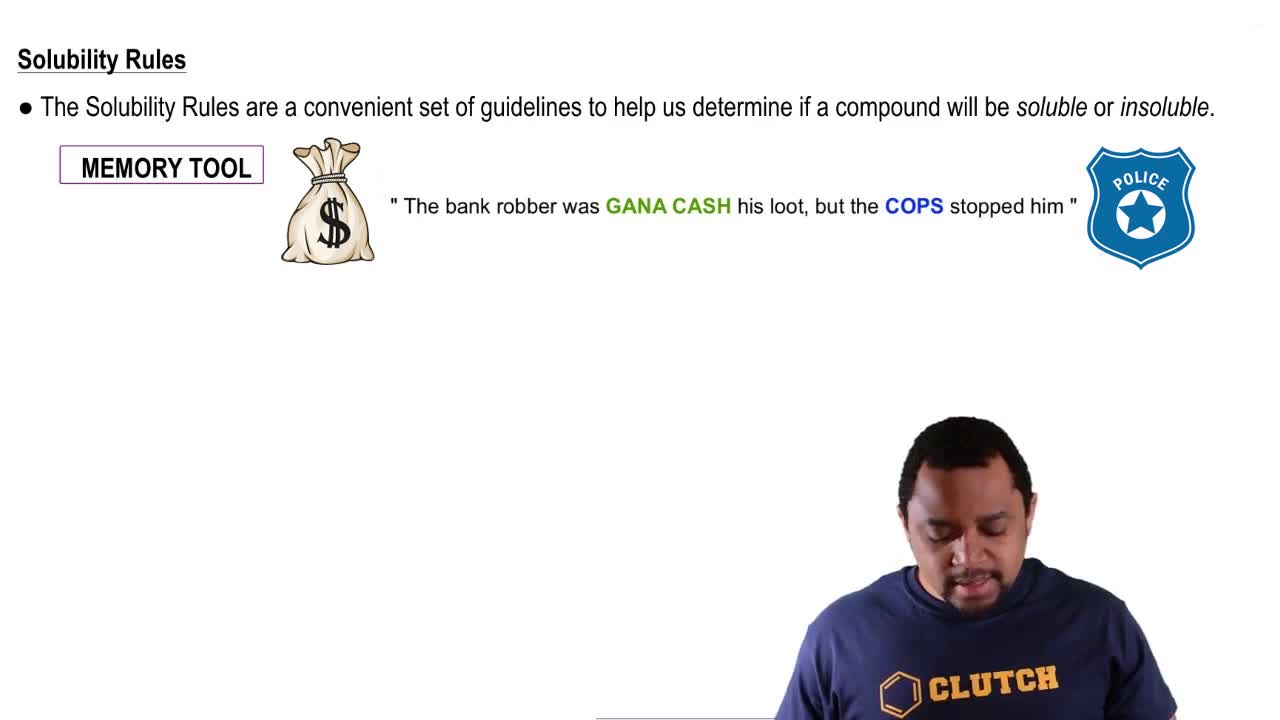
Solubility Rules

Saturated Solution

A saturated solution is one in which the maximum amount of solute has been dissolved in the solvent at a given temperature and pressure. When additional solute is added to a saturated solution, it will not dissolve and will remain undissolved. Identifying whether a solution is saturated is essential for predicting the behavior of solutes in a solvent.
Video consigliato:
Percorso guidato
01:11
Types of Aqueous Solutions

Ionic Compounds and Their Solubility

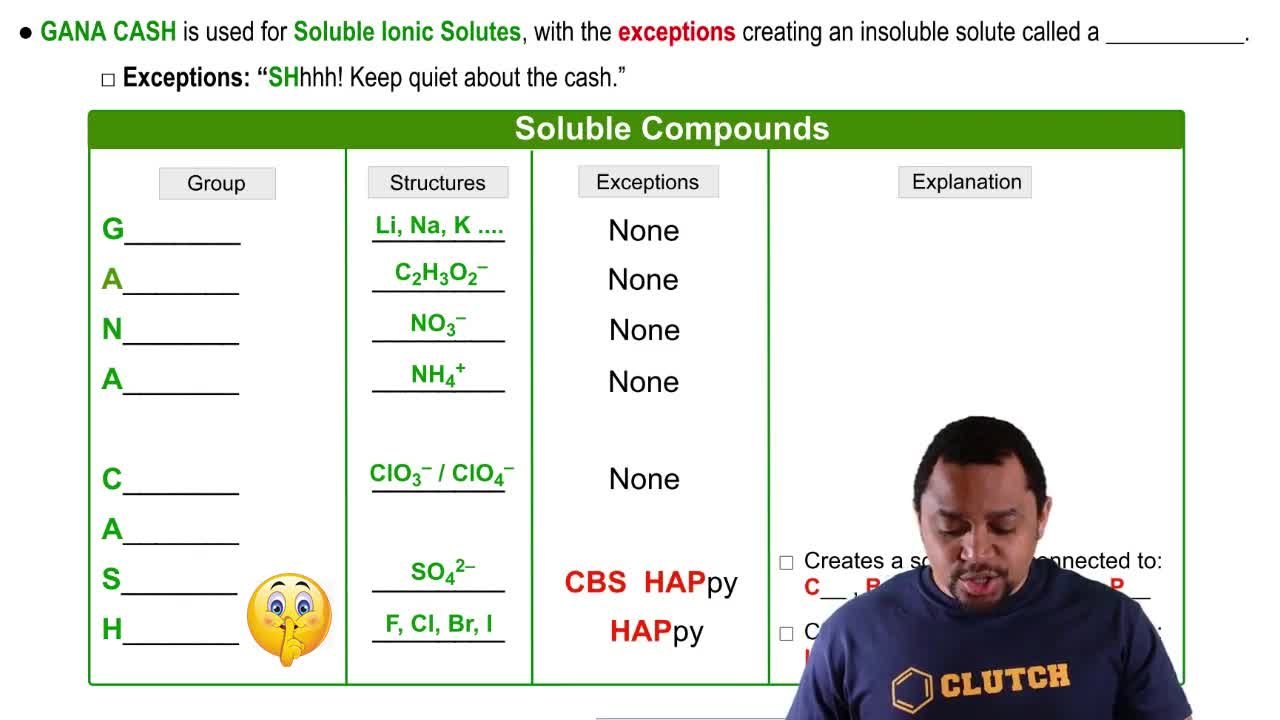
Ionic compounds, such as Pb(NO3)2, dissociate into their constituent ions when dissolved in water. The solubility of these compounds varies widely based on their chemical nature and the temperature of the solvent. Knowledge of the solubility rules for ionic compounds helps predict whether a specific ionic solid will dissolve in water, which is key to answering the question about saturation.
Video consigliato:
Percorso guidato
02:30
Soluble Ionic Solutes