Ca+(𝑔)+e−⟶Ca(𝑔) Which of the following statements are true?
i. The energy change for this process is the electron affinity of the Ca+ ion. ii. The energy change for this process is the negative of the first ionization energy of the Ca atom. iii. The energy change for this process is the negative of the electron affinity of the Ca atom. a. Only statement i is true. b. Only statement ii is true. c. Only statement iii is true. d. Only statements i and ii are true. e. All three statements are true.
Guida verificata passo dopo passo
1
Identify the process described in the equation: Ca+(g) + e− ⟶ Ca(g). This is a reduction process where a calcium ion (Ca+) gains an electron to form a neutral calcium atom (Ca).
Understand the concept of electron affinity: Electron affinity is the energy change that occurs when an electron is added to a neutral atom in the gaseous state to form a negative ion. In this case, we are adding an electron to a positive ion, not a neutral atom.
Analyze statement i: The process involves adding an electron to a Ca+ ion, not a neutral atom, so it is not the electron affinity of the Ca+ ion. Electron affinity typically refers to adding an electron to a neutral atom.
Analyze statement ii: The process is the reverse of the first ionization energy of the Ca atom, which involves removing an electron from a neutral Ca atom to form a Ca+ ion. Therefore, the energy change is the negative of the first ionization energy of the Ca atom.
Analyze statement iii: The process is not related to the electron affinity of the Ca atom, as electron affinity involves adding an electron to a neutral atom, not a positive ion. Conclude which statements are true based on the analysis.>
Risposta video verificata per un problema simile:
Questa soluzione video è stata consigliata dai nostri tutor come utile per risolvere questo problema.
Durata del video:
2m
Guarda un video:
0 Commenti
Concetti chiave
Ecco i concetti essenziali che devi comprendere per rispondere correttamente alla domanda.
Electron Affinity
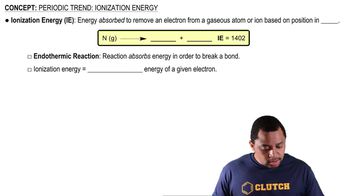
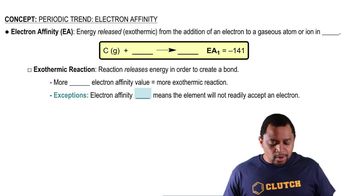
Electron affinity refers to the energy change that occurs when an electron is added to a neutral atom in the gas phase to form a negative ion. A positive electron affinity indicates that energy is released during this process, while a negative value suggests that energy must be supplied. Understanding this concept is crucial for analyzing the energy changes in the given reaction involving the Ca+ ion.
Ionization energy is the amount of energy required to remove an electron from a neutral atom in the gas phase, forming a positively charged ion. The first ionization energy specifically refers to the energy needed to remove the outermost electron. This concept is essential for evaluating the energy changes associated with the transition from Ca to Ca+ and understanding the relationship between ionization energy and the given statements.
The energy change in chemical reactions can be understood through the concepts of enthalpy and thermodynamics. In the context of the provided equation, the energy change reflects the difference in energy between the reactants and products. Recognizing how these energy changes relate to electron affinity and ionization energy is vital for determining the truth of the statements regarding the Ca+ ion and its associated energy transformations.


 Guida verificata passo dopo passo
 01:34
01:34