Skip to main content
Genetics
Il mio corso
Impara
Preparazione agli esami
AI Tutor
Guide di studio
Soluzioni per libri di testo
Flashcard
Esplora
Prova l'app
Il mio corso
Impara
Preparazione agli esami
AI Tutor
Guide di studio
Soluzioni per libri di testo
Flashcard
Esplora
Prova l'app
Indietro
Ch. 16 - Regulation of Gene Expression in Bacteria - Lac Operon
Puoi toccare per girare la carta.
Inducible enzymes
Puoi toccare per girare la carta.
👆
Inducible enzymes
Enzymes produced by bacteria only when specific substrates are present, allowing adaptation to environmental changes.
Avanzamenti del tracciato
I pulsanti di controllo sono stati cambiati in modalità "navigazione".
1/20
Video consigliati
04:27
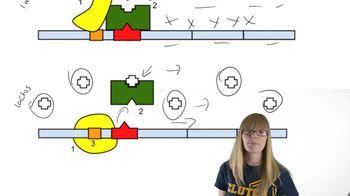
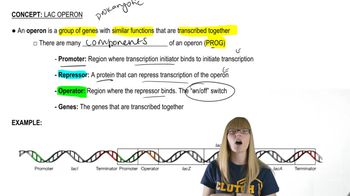
Lac Operon Overview
3404
views
68
rank
2
comments
06:55
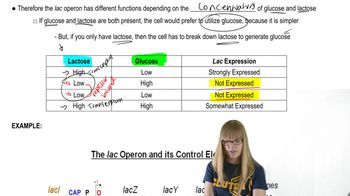
Lac Operon Regulation
2855
views
36
rank
2
comments
07:01
Lac Operon Summary
2352
views
26
rank
3
comments
Termini in questo insieme (20)
Nascondere definizioni
Inducible enzymes
Enzymes produced by bacteria only when specific substrates are present, allowing adaptation to environmental changes.
Constitutive enzymes
Enzymes continuously produced regardless of the chemical makeup of the environment.
Repressible system
Gene expression is inhibited by the presence of a specific molecule, often the end product of a metabolic pathway.
Negative control in gene regulation
Gene expression occurs unless shut off by a regulator molecule, typically a repressor.
Positive control in gene regulation
Transcription occurs only when a regulator molecule directly stimulates RNA production.
Lac operon structural genes
Includes lacZ (β-galactosidase), lacY (permease), and lacA (transacetylase), transcribed as a single polycistronic mRNA.
Function of β-galactosidase (lacZ gene product)
Converts lactose into glucose and galactose monosaccharides for metabolism.
Role of lacY gene product (permease)
Facilitates the entry of lactose into the bacterial cell.
lacI gene and its product
Produces an allosteric repressor protein that regulates transcription of lac operon structural genes.
Operon model (Jacob and Monod)
A group of genes regulated and expressed together as a unit, controlled by a repressor binding to the operator.
Negative control of lac operon
Transcription occurs only when the repressor fails to bind the operator, allowing RNA polymerase access.
Constitutive mutations in lac operon
Mutations causing continuous enzyme production regardless of lactose presence, due to defective repressor or operator.
Catabolite-activating protein (CAP)
Exerts positive control over lac operon by facilitating RNA polymerase binding when glucose is absent.
Effect of glucose on CAP binding
Glucose inhibits adenylyl cyclase, reducing cAMP levels and preventing CAP from binding to the promoter.
cAMP role in lac operon regulation
Binds to CAP enabling it to bind DNA and activate transcription of the lac operon.
Repression loop in lac operon
Formed when repressor binds multiple operator sites, preventing RNA polymerase access and repressing transcription.
Tryptophan (trp) operon
A repressible gene system producing enzymes for tryptophan biosynthesis, repressed when tryptophan is abundant.
Attenuation mechanism in trp operon
Regulation via mRNA secondary structure forming terminator or antiterminator hairpins depending on tryptophan availability.
Riboswitches
mRNA elements that bind small ligands causing conformational changes to regulate gene expression by forming terminator or antiterminator structures.
Small noncoding RNAs in bacteria
Regulate gene expression by binding mRNAs to block or enable translation through ribosome-binding site accessibility.
 IndietroIndietro
 04:27