 Indietro
Adaptive Immunity - Microbiology
 04:57

Termini in questo insieme (30)
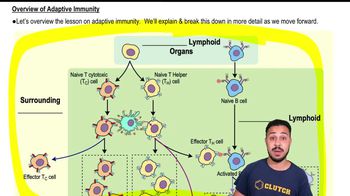
Adaptive immunity is a specific immune response that develops after exposure to a pathogen, involving memory and targeted attack by lymphocytes.
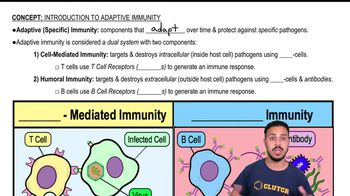
Humoral immunity involves B cells and antibody production; cell-mediated immunity involves T cells attacking infected cells.
Cytokines are signaling proteins released by immune cells to regulate immunity, inflammation, and cell communication.
An antigen is any molecule or molecular structure recognized by the immune system as foreign, triggering an immune response.
An epitope is the specific part of an antigen that is recognized and bound by an antibody or a receptor on a lymphocyte.
Haptens are small molecules that are not immunogenic alone but can elicit an immune response when attached to a larger carrier molecule.
An antibody is a protein produced by B cells that binds specifically to antigens to neutralize or mark them for destruction.
Immunoglobulins are antibodies; glycoproteins produced by plasma cells that recognize and bind antigens.
B cells produce antibodies when stimulated by antigen binding and helper T cell signals.
Valence refers to the number of antigen-binding sites on an antibody molecule.
An antibody has two heavy chains and two light chains forming a Y-shaped molecule with variable and constant regions.
The variable region of the antibody binds specifically to the antigen's epitope.
Constant regions determine antibody class and effector function; variable regions bind specific antigens.
IgG is the most abundant antibody in blood and tissue fluids; it opsonizes pathogens and provides long-term immunity.
IgG crosses the placenta to provide passive immunity to the fetus.
IgA is found in mucosal areas like saliva and breast milk; it protects mucous membranes by neutralizing pathogens.
IgM is the first antibody produced in an immune response; it is pentameric and effective at agglutination and complement activation.
IgE binds to mast cells and basophils, mediating allergic reactions and defense against parasites.
B cells are lymphocytes that produce antibodies after activation by antigen and helper T cells.
Agglutination is the clumping of pathogens by antibodies, enhancing their removal by immune cells.
Opsonization is the coating of pathogens by antibodies to enhance phagocytosis by immune cells.
Neutralization occurs when antibodies block pathogen binding sites, preventing infection of host cells.
APCs process and present antigens to T cells to initiate adaptive immune responses.
Dendritic cells are professional APCs that capture antigens and activate naive T cells.
Helper T cells activate B cells, cytotoxic T cells, and macrophages by releasing cytokines.
Cytotoxic T cells release perforin to form pores and granzymes to induce apoptosis in infected cells.
Memory B cells persist after infection to provide faster and stronger antibody responses upon re-exposure.
The primary response is slower with lower antibody levels; the secondary response is faster and produces more antibodies due to memory cells.
Immunity developed after natural infection, where the body actively produces antibodies and memory cells.
Immunity gained by receiving antibodies naturally, such as maternal IgG crossing the placenta.