 Indietro
Antibiotics and Plasmids in Microbiology
 01:47

Termini in questo insieme (20)
Antibiotics are chemical substances produced by microorganisms that kill or inhibit the growth of other microorganisms.
Antibiotics work by targeting essential bacterial processes such as cell wall synthesis, protein synthesis, DNA replication, or metabolic pathways.
Antibiotic resistance occurs when bacteria evolve mechanisms to survive exposure to antibiotics that would normally kill them or inhibit their growth.
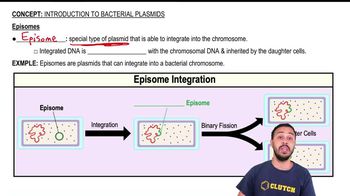
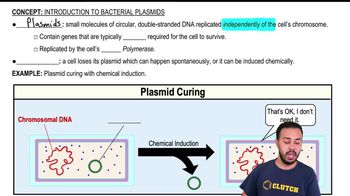
Plasmids are small, circular, double-stranded DNA molecules found in bacteria that replicate independently of chromosomal DNA.
Plasmids often carry genes that confer antibiotic resistance, allowing bacteria to share resistance traits through horizontal gene transfer.
Plasmids are transferred mainly by conjugation, a process where two bacteria connect and transfer DNA through a pilus.
Plasmids serve as vectors to insert foreign genes into bacteria for cloning, protein production, or gene expression studies.
The bacterial cell wall is a common antibiotic target, disrupted by drugs like penicillin.
A broad-spectrum antibiotic is effective against a wide range of bacteria, both Gram-positive and Gram-negative.
A narrow-spectrum antibiotic targets specific types or groups of bacteria.
Bacteria acquire resistance genes on plasmids through conjugation, transformation, or transduction, enabling survival against antibiotics.
The pilus is a structure that connects donor and recipient bacteria to facilitate plasmid transfer during conjugation.
Chromosomal DNA contains essential genes for survival, while plasmid DNA carries accessory genes like antibiotic resistance and replicates independently.
Horizontal gene transfer is the movement of genetic material between organisms other than by descent, often via plasmids.
Antibiotic stewardship helps prevent the development and spread of antibiotic resistance by promoting appropriate use of antibiotics.
An R plasmid is a plasmid that carries one or more antibiotic resistance genes.
Plasmids are used as vectors to clone genes, produce proteins, and create genetically modified organisms.
Beta-lactam antibiotics inhibit bacterial cell wall synthesis by binding to penicillin-binding proteins.
The origin of replication on a plasmid is the sequence where DNA replication begins, allowing plasmid duplication.
Bacteria produce enzymes that degrade antibiotics, alter antibiotic targets, or pump antibiotics out, often encoded on plasmids.