 Indietro
Antimicrobial Drugs and Mechanisms - Microbiology
 05:33

Termini in questo insieme (20)
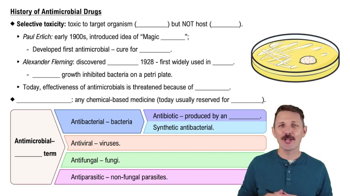
Selective toxicity is the ability of a drug to target and kill microorganisms without harming the host's cells.
Alexander Fleming discovered penicillin, the first widely used antibiotic, which revolutionized treatment of bacterial infections.
Most antibiotics are produced by bacteria of the genus Streptomyces.
Penicillin kills bacteria by inhibiting cell wall synthesis, primarily targeting Gram-positive bacteria.
They block enzymes involved in DNA or RNA synthesis, preventing replication and transcription in microbes.
Antimetabolites mimic natural substrates, interfering with metabolic pathways and inhibiting microbial growth.
Antifungals disrupt fungal cell membranes or cell wall synthesis, often targeting ergosterol in membranes.
Antivirals inhibit viral replication by targeting viral enzymes or blocking entry into host cells.
Penicillins, cephalosporins, and carbapenems are classes of beta-lactam antimicrobials.
Vancomycin inhibits bacterial cell wall synthesis by binding to peptide precursors, effective against Gram-positive bacteria.
Tetracyclines inhibit protein synthesis by binding to the 30S ribosomal subunit, blocking tRNA attachment.
Macrolides inhibit bacterial protein synthesis by binding to the 50S ribosomal subunit, preventing elongation.
Rifamycins inhibit bacterial RNA synthesis by binding to RNA polymerase.
Quinolones inhibit bacterial DNA gyrase and topoisomerase IV, enzymes essential for DNA replication.
Sulfonamides act as antimetabolites by inhibiting folic acid synthesis in bacteria.
Synergism occurs when two drugs combined produce a greater effect than the sum of their individual effects.
Antagonism occurs when one drug interferes with the action of another, reducing overall effectiveness.
Resistance mechanisms include drug inactivation, target modification, decreased permeability, and efflux pumps.
Lipopeptides disrupt bacterial cell membrane integrity, causing ion leakage and cell death.
Glycylcyclines are structurally related to tetracyclines but overcome some tetracycline resistance mechanisms.