 Indietro
Basic Microbiology and Atomic Structure Concepts
 02:13
02:13
Termini in questo insieme (11)
Viruses are not considered living organisms because they cannot reproduce or carry out metabolism without a host cell.
An atom is the smallest unit of an element that retains its chemical properties.
A proton is a positively charged particle located in the nucleus of an atom.
A neutron is a particle with no charge found in the nucleus of an atom.
An electron is a negatively charged particle found outside the nucleus in electron shells.
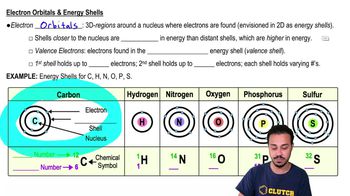
An electron shell is the area around the nucleus where electrons are found.
An isotope is an atom of the same element with a different number of neutrons.
An ion is an atom that has gained or lost electrons and carries a charge.
A cation is a positively charged ion.
An anion is a negatively charged ion.
An electrolyte is an ion that conducts electricity when dissolved in water.