 Indietro
Biomolecules and Protein Structure in Microbiology
 01:17
01:17
Termini in questo insieme (13)
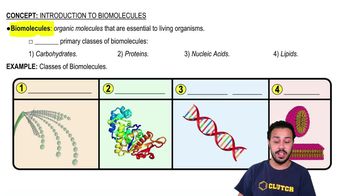
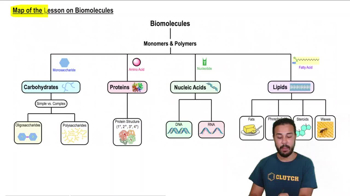
Lipids function in long-term energy storage, membrane structure, and signaling.
Examples include fats, phospholipids, and steroids.
Nucleotides are the building blocks of nucleic acids.
Nucleic acids store and transmit genetic information.
Examples include DNA and RNA.
Amino acids are the building blocks of proteins.
Proteins function as enzymes, structural components, and signaling molecules.
Examples include enzymes, antibodies, and hemoglobin.
The primary structure is the linear sequence of amino acids in a polypeptide chain.
The secondary structure includes local folding into alpha helices and beta sheets stabilized by hydrogen bonds.
The tertiary structure is the overall 3D shape of a single polypeptide, formed by interactions among side chains.
The quaternary structure is the arrangement of multiple polypeptide subunits into a functional protein complex.
Proteins can be denatured by heat, pH changes, chemicals, or mechanical forces, disrupting their structure and function.