 Indietro
Ch. 13: Immune System Disorders
 02:41

Termini in questo insieme (27)
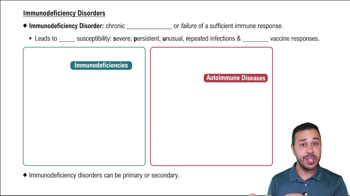
A genetic condition causing a lack of a properly functioning immune system, affecting B cells, T cells, phagocytes, or complement proteins.
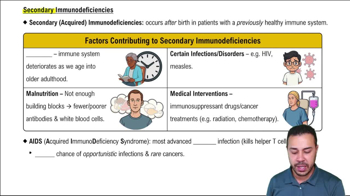
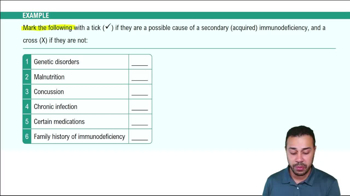
An acquired weakening of the immune system later in life due to factors like aging, infections, or medical treatments.
Humoral (B cells), Cellular (T cells), Phagocyte defects, Complement protein defects, Combined (B and T cells), Innate immune defects.
Bone marrow transplants, antibody administration, cytokine therapy, stem cell or gene therapy.
HIV attacks T helper cells, decreasing their numbers and leading to AIDS, which increases vulnerability to infections.
by recognizing and clearing abnormal cells
The immune system attacks the body’s own healthy tissues, causing autoimmune disorders.
Type 1 diabetes, lupus, Crohn’s disease, rheumatoid arthritis, multiple sclerosis, Graves’ disease.
Systemic (affect multiple tissues) and localized (target specific tissue).
Joint and muscle pain, fatigue, skin rashes, low-grade fever, organ dysfunction.
An inappropriate immune response that can harm the body; can be localized or systemic.
Type I: Allergy (IgE),
Type II: Cytotoxic (IgG or IgM)
Type III: Immune complex
Type IV: Delayed (T cells)
First exposure sensitizes the body producing IgE antibodies; later exposure causes allergen to bind IgE on mast cells, triggering symptoms.
Food allergies: hives, swelling
Atopic asthma: wheezing
Seasonal allergies: sneezing
Atopic dermatitis: dry, itchy skin
Peanuts, tree nuts, milk, eggs, fish, shellfish, soy, wheat.
A severe allergic reaction affecting the whole body;
hives, swelling, wheezing, low blood pressure
Epinephrine injection
IgG or IgM antibodies bind antigens on cell surfaces causing cell damage
Goodpasture syndrome
Autoimmune hemolytic anemia
Rheumatic heart disease
Type A has A antigen
B has B antigen
AB has both
O has neither
O− is the universal red blood cell donor
AB+ is the universal recipient.
What is Hemolytic transfusion reaction?
Destruction of incompatible donor red blood cells
Occurs when an Rh-negative mother develops antibodies against an Rh-positive baby’s red blood cells
Rh(D) immunoglobulin (RhoGAM) is given to Rh-negative mothers to prevent sensitization to Rh-positive blood.
Wheal and flare in allergy testing differ in what ways?
Wheal is a raised skin area
Flare is the red area surrounding the wheal
Difference between Allergy and Intolerance
Allergy: involves an immune response and happens rapidly
Intolerance: does not involve the immune system and develops slowly.
What is Myasthenia gravis and Graves’ disease do in Type II hypersensitivity?
Myasthenia gravis blocks receptors &
Graves’ disease overstimulates receptors without destroying cells.