 Indietro
Ch. 14: Vaccines and Immunity
 04:19

Termini in questo insieme (27)
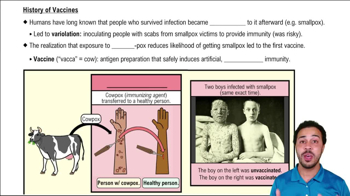
An early method to protect against smallpox using dried smallpox scabs to expose a healthy person
Discovered that cowpox infection protected against smallpox, established the foundation of vaccination
(the term vaccination comes from vacca, Latin for cow.)
Developed early vaccines for rabies and anthrax, advancing vaccine science as knowledge of pathogens grew
Vaccines save millions of lives target diseases for eradication/destruction
Immunity developed through vaccination
How long does it take for vaccines to provide protection?
It takes about two weeks for antibody levels to peak after vaccination
Community protection when enough people are immune, making the disease harder to spread
Low vaccination rates weaken herd immunity, increasing disease spread risk.
Diphtheria, tetanus, and pertussis.
Measles, mumps, and rubella.
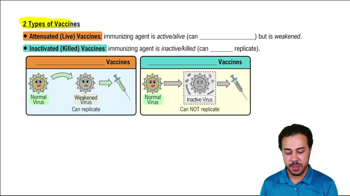
Contain weakened pathogens, usually create strong, long-lasting immunity, but may not be safe for immunocompromised individuals.
MMR, chickenpox, and rotavirus vaccines.
Contain killed pathogens that cannot reproduce
Contain the entire pathogen inactivated by heat, chemicals, or radiation
Contain only specific parts of a pathogen, often require adjuvants to strengthen the immune response.
Deliver mRNA into host cells, which produce antigen proteins to trigger an immune response
Use harmless carrier viruses or bacteria to deliver genetic instructions from a pathogen, triggering immunity
example: COVID-19 vaccine.
Additives that strengthen the immune response to an antigen.
Purified subunit, toxoid, and conjugate vaccines.
Contain purified, inactivated toxins
Connect polysaccharide antigens to proteins to create a stronger immune response
Use genes in plasmids introduced into the body; human cells produce antigens triggering both humoral and cellular immunity.
The ability of the immune system to respond faster upon re-exposure to a previously encountered pathogen.
An additional vaccine dose that strengthens and prolongs immunity.
A weakened form of a pathogen used in live vaccines to stimulate immunity without causing disease.
A killed pathogen that cannot reproduce, used in inactivated vaccines.
A small circular DNA molecule used in DNA vaccines to deliver genetic instructions for antigen production.