 Indietro
Ch. 16: Respiratory System Infections
 05:21

Termini in questo insieme (23)
Upper respiratory tract
Filters, warms, and humidifies air.
Lower respiratory tract
Directs air to the lungs.
Cilia
Move mucus and trapped debris.
Sinusitis
Sinus inflammation.
Alveolar macrophages
Remove pathogens in the alveoli.
Pharyngitis
Throat inflammation.
Epiglottitis
Swelling that can block the airway.
Pneumonia
Inflammation of lung tissue.
Dyspnea
Shortness of breath.
RSV
Especially serious in infants and older adults.
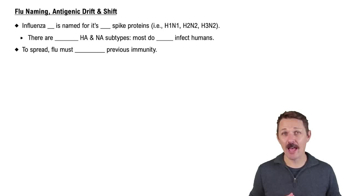
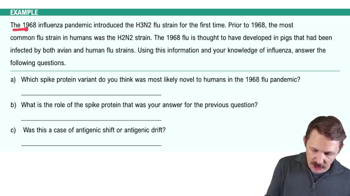
Difference between Antigenic drift and Antigenic shift?
Antigenic shift- major changes, can cause pandemic
Antigenic drift- small changes
Hantavirus
Associated with rodent urine and feces.
S. pyogenes
Group A strep; causes strep throat.
Rheumatic fever follows up untreated strep throat.
Scarlet fever
Sandpaper-like rash and strawberry tongue.
Diphtheria
Pseudomembrane and bull neck.
Pertussis
Whooping cough; has three stages.
DTaP/Tdap
Vaccines that protect against pertussis, diphtheria, and tetanus.
Adenovirus
A nonenveloped DNA virus.
More than 50 types can infect humans.
Can cause respiratory infections in children.
SARS-CoV-2
Causes COVID-19
Three Stages of Pertussis
Stage 1: Catarrhal Phase
Stage 2: Paroxysmal Stage
Stage 3: Convalescent Stage
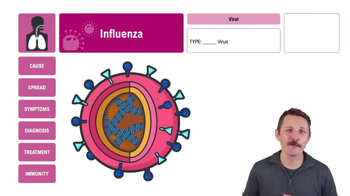
(HA) Hemagglutinin
Helps influenza attach to host cells.
(NA) Neuraminidase
Helps new influenza viruses escape host cells.
Main functions of the respiratory system
-Brings oxygen into the body.
-Removes carbon dioxide.
-Most common entry point for microbes.