Indietro

chapter 11

I pulsanti di controllo sono stati cambiati in modalità "navigazione".
1/25
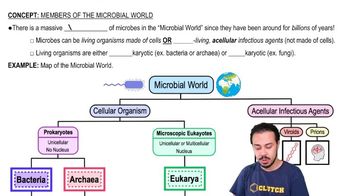
  • What are the two domains of prokaryotes?

    The two domains of prokaryotes are Bacteria and Archaea.
  • What characterizes the Pseudomonadota (Proteobacteria) phylum?

    They are Gram-negative, chemoheterotrophic bacteria and the largest taxonomic group with five classes including Alpha-, Beta-, Gamma-, Delta-proteobacteria, and Campylobacterota.
  • What is a key feature of Alphaproteobacteria?

    Most can grow with very low nutrient levels and many have stalks or buds called prosthecae.
  • What is the ecological role of Pelagibacter?

    Pelagibacter is one of the most abundant ocean microorganisms, extremely small, and plays an important role in Earth's carbon cycle.
  • What is the significance of Azospirillum in soil?

    Azospirillum grows in soil using nutrients from plants, forms associations with roots, and fixes nitrogen.
  • What disease is caused by Rickettsia and how is it transmitted?

    Rickettsia causes spotted fevers like epidemic typhus and Rocky Mountain spotted fever, transmitted by insect and tick bites.
  • What is the function of Rhizobium and Bradyrhizobium?

    They fix nitrogen in the roots of leguminous plants and are commonly called rhizobia.
  • What disease does Agrobacterium cause in plants?

    Agrobacterium causes crown gall by inserting a plasmid into plant cells, inducing tumor formation.
  • What is the role of Nitrosomonas and Nitrobacter in nitrogen cycling

    ?


    Nitrosomonas converts ammonium to nitrite, and Nitrobacter converts nitrite to nitrate, both are chemoautotrophic bacteria.
  • What are the characteristics of Betaproteobacteria Spirillum and Sphaerotilus?

    Spirillum is found in freshwater and moves via polar flagella; Sphaerotilus forms protective sheaths in freshwater and sewage.
  • What diseases are caused by Bordetella and Neisseria?

    Bordetella pertussis causes whooping cough; Neisseria gonorrhoeae causes gonorrhea and N. meningitidis causes meningococcal meningitis.

  • What is unique about Gammaproteobacteria Pseudomonas?

    Pseudomonas are metabolically diverse, common in soil, opportunistic pathogens, and have polar flagella.
  • What diseases are caused by Legionella and Coxiella?

    Legionella causes legionellosis; Coxiella burnetii causes Q fever.
  • What is the significance of Vibrio cholerae?

    Vibrio cholerae causes cholera, a severe intestinal disease.
  • What are Enterobacteriales and their common traits?

    Enterobacteriales are facultative anaerobes, ferment carbohydrates, have peritrichous flagella, and inhabit the intestinal tract.
  • What diseases are caused by Salmonella and Shigella?

    Salmonella causes foodborne illness and typhoid fever; Shigella causes bacillary dysentery.
  • What is the motility characteristic of Proteus?

    Proteus exhibits swarming motility forming concentric rings of growth.
  • What are the features of Campylobacter and Helicobacter?

    Campylobacter are microaerophilic vibrios causing foodborne intestinal disease; Helicobacter causes peptic ulcers and stomach cancer.
  • What distinguishes Chlamydiae bacteria?

    They lack peptidoglycan, grow intracellularly, and form an infective elementary body.
  • What diseases are caused by Chlamydia trachomatis and Chlamydophila psittaci?

    Chlamydia trachomatis causes trachoma and urethritis; Chlamydophila psittaci causes respiratory psittacosis.
  • What is the motility mechanism of spirochetes?

    Spirochetes move via axial filaments that rotate the cell in a corkscrew fashion.
  • What are the two groups of Gram-positive bacteria based on G+C content?

    High G+C ratio bacteria include Streptomyces and Mycobacterium; low G+C ratio bacteria include Streptococcus and Clostridium.
  • What diseases are caused by Bacillus species?

    Bacillus anthracis causes anthrax; B. cereus causes food poisoning; B. thuringiensis is an insect pathogen.
  • What are the characteristics of Staphylococcus aureus?

    Forms grapelike clusters of cocci, causes wound infections, often antibiotic resistant, and produces an enterotoxin.
  • What are the environmental adaptations of Archaea extremophiles?

    Halophiles require >25% salt; thermophiles grow above 80°C; acidophiles grow at pH near 0; methanogens produce methane anaerobically.