 Indietro
Chemical Principles in Microbiology
 02:13
02:13
Termini in questo insieme (32)
An atom is the smallest unit of matter that cannot be subdivided into smaller substances.
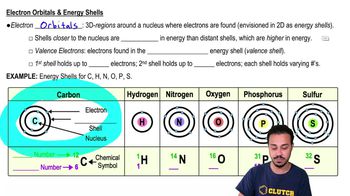
Atoms are composed of electrons (negative), protons (positive), and neutrons (neutral). Protons and neutrons form the nucleus, electrons orbit around it.
Atoms with the same number of protons are classified as the same chemical element.
The atomic number is the number of protons in the nucleus of an atom.
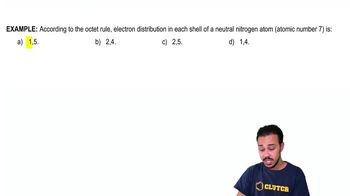
Electrons are arranged in electron shells corresponding to different energy levels; the innermost shell has the lowest energy.
Valence is the number of missing or extra electrons in the outermost electron shell of an atom.
Atoms form molecules by filling their outermost shells through chemical bonds formed by valence electrons.
Ionic bonds form by electron transfer; covalent bonds form by sharing electrons; hydrogen bonds are weak attractions involving hydrogen and electronegative atoms.
An ionic bond is an attraction between oppositely charged ions formed when atoms gain or lose electrons.
A covalent bond forms when two atoms share one or more pairs of electrons; it is stronger and more common in organisms than ionic bonds.
A hydrogen bond is a weak interaction where a hydrogen atom covalently bonded to an electronegative atom is attracted to another electronegative atom.
Synthesis reactions combine atoms or molecules to form larger molecules; they are anabolic and include dehydration synthesis.
Decomposition reactions break down molecules into smaller parts; they are catabolic and include hydrolysis.
Exchange reactions involve both synthesis and decomposition, where bonds are both made and broken.
Redox reactions involve the transfer of electrons; oxidation is loss of electrons, reduction is gain of electrons.
Inorganic compounds usually lack carbon and are simple; organic compounds contain carbon and are structurally complex.
The carbon skeleton is the chain of carbon atoms in an organic molecule, which can form straight, branched, or ring structures.
Functional groups are specific groups of atoms attached to carbon skeletons that determine chemical properties of organic compounds.
Macromolecules are large molecules formed by covalent bonding of many monomers; examples include carbohydrates, lipids, proteins, and nucleic acids.
Dehydration synthesis joins two monomers by removing a water molecule, forming a covalent bond.
Carbohydrates serve as cell structures and energy sources; they include sugars and starches composed of C, H, and O.
Monosaccharides are simple sugars with 3-7 carbon atoms, e.g., glucose and deoxyribose.
Disaccharides form when two monosaccharides join by dehydration synthesis and can be broken down by hydrolysis.
Lipids are nonpolar molecules mainly composed of C, H, and O; they include fats (triglycerides) and complex lipids like phospholipids.
Saturated fats have no double bonds in fatty acids; unsaturated fats have one or more double bonds.
Phospholipids are complex lipids with a glycerol, two fatty acids, and a phosphate group; they have polar heads and nonpolar tails important for cell membranes.
Proteins are made of amino acids and are essential for cell structure, enzymes, transport, movement, and toxins.
Amino acids are protein subunits containing an alpha-carbon with attached amino, carboxyl, and side groups.
Protein structure levels include primary (amino acid sequence), secondary (helix and sheets), tertiary (3D folding), and quaternary (multiple chains).
Denaturation is the loss of protein shape and function due to hostile environments like temperature or pH changes.
Nucleic acids consist of nucleotides made of a pentose sugar, phosphate group, and nitrogenous base; DNA and RNA are examples.
Adenosine triphosphate (ATP) stores chemical energy and releases it by hydrolysis of phosphate groups for cellular use.