Skip to main content
Microbiology
Il mio corso
Impara
Preparazione agli esami
AI Tutor
Guide di studio
Soluzioni per libri di testo
Flashcard
Esplora
Prova l'app
Il mio corso
Impara
Preparazione agli esami
AI Tutor
Guide di studio
Soluzioni per libri di testo
Flashcard
Esplora
Prova l'app
Indietro
Immune System Disorders in Microbiology
Puoi toccare per girare la carta.
What is immunodeficiency?
Puoi toccare per girare la carta.
👆
What is immunodeficiency?
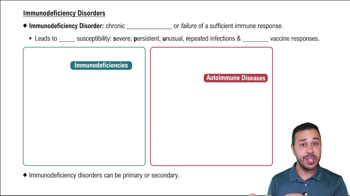
Immunodeficiency
is the lack of a properly functioning immune system.
Avanzamenti del tracciato
I pulsanti di controllo sono stati cambiati in modalità "navigazione".
1/21
Video consigliati
02:41
Secondary Immunodeficiencies
194
views
4
rank
02:05
Immunodeficiency Disorders Example 1
178
views
3
rank
03:13
Immunodeficiency Disorders
227
views
4
rank
Termini in questo insieme (21)
Nascondere definizioni
What is immunodeficiency?
Immunodeficiency
is the lack of a properly functioning immune system.
What are the two main types of immunodeficiencies?
Primary immunodeficiency (congenital) and secondary immunodeficiency (acquired).
Define primary immunodeficiency.
A congenital inborn error affecting one or more immune factors, leading to deficient immunity.
Name some examples of primary immunodeficiencies.
Selective IgA deficiency, X-linked agammaglobulinemia, DiGeorge syndrome, SCID, Wiskott-Aldrich syndrome.
What immune components are affected in primary immunodeficiencies?
B cells/antibodies (humoral), T cells (cellular), phagocytes, complement proteins, or combined defects.
What percentage of primary immunodeficiencies are due to B cell issues?
~50% of primary immunodeficiencies involve B cell defects.
What is DiGeorge syndrome?
A primary immunodeficiency caused by deletion on chromosome 22, leading to impaired thymus development and T cell defects.
List therapies for primary immunodeficiencies.
Bone marrow transplants, antibody administration, cytokine therapies, stem cell transplants, thymus transplantation, gene therapy.
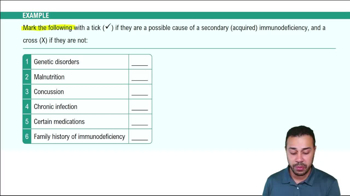
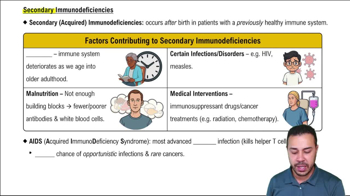
What causes secondary immunodeficiencies?
Aging, infectious agents, medical interventions, and systemic disorders like diabetes or malnutrition.
Give examples of medical interventions that cause secondary immunodeficiencies.
Cancer treatments (radiation, chemotherapy), corticosteroids, anticonvulsants, immunosuppressants.
Are drug-induced secondary immunodeficiencies permanent?
Usually reversible when the drug is stopped, but some patients (e.g., transplant recipients) must continue medication.
How do infectious agents cause secondary immunodeficiencies?
By inhibiting immune defenses, breaking down antibodies, interfering with signaling, or infecting immune cells.
What is the effect of HIV on the immune system?
HIV infects and depletes T helper cells, leading to AIDS when T cell counts fall critically low.
Why is cancer considered a failure of the immune system?
Because the immune system fails to clear abnormal cells, allowing cancer to develop.
Why are HIV patients at increased risk for certain cancers?
Due to loss of T helper cells, which impairs immune surveillance against cancer cells.
What are immunotherapies in cancer treatment?
Treatments that boost immune defenses, including vaccines like Gardasil and monoclonal antibodies like nivolumab.
Define autoimmunity.
An immune system attack against healthy self-tissues that should normally be tolerated.
What factors influence the development of autoimmune disorders?
Genetics and exposure to certain infectious agents.
Name some autoimmune diseases affecting the endocrine system.
Graves’ disease, Hashimoto’s disease, Type I diabetes mellitus.
What is hypersensitivity?
An inappropriate immune response, such as allergy or autoimmunity, that can be localized or systemic.
What does the hygiene hypothesis propose?
That reduced microbiota diversity in developed countries due to clean conditions and antibiotics increases autoimmune and allergy risk.
 IndietroIndietro
 02:41