 Indietro
Introduction to Microbiology
 03:36
03:36

Termini in questo insieme (24)
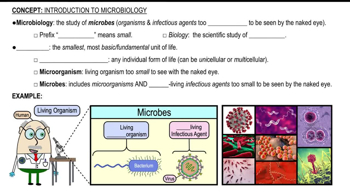
Microbes include bacteria, archaea, fungi, protozoa, algae, and viruses. Living microbes are bacteria, archaea, fungi, protozoa, and algae. Non-living infectious agents are viruses.
Microbiome is the collective genomes of microbes in an environment. Microbiota are the microbial communities; normal microbiota permanently reside and benefit the host, while transient microbiota are temporary and may not be harmful or beneficial.
Normal microbiota protect against pathogens, aid digestion, produce vitamins, and stimulate the immune system.
The three domains are Bacteria, Archaea, and Eukarya. Microbes are found in Bacteria, Archaea, and some Eukarya (like fungi, protozoa, and algae).
Prokaryotic cells lack a nucleus (Bacteria and Archaea). Eukaryotic cells have a nucleus (Eukarya).
Microorganisms vary in cell type, structure, metabolism, reproduction, and habitat. For example, bacteria have peptidoglycan cell walls; archaea have unique lipids; fungi have chitin walls.
Use features like cell type, cell wall composition, metabolism, and reproduction to classify microbes into bacteria, archaea, fungi, protozoa, algae, or viruses.
Microbes inhabit soil, water, air, extreme environments (hot springs, deep sea vents), and living hosts.
Good: nutrient cycling, food production, biotechnology, health. Bad: cause diseases, spoil food, produce toxins.
Biogenesis: life arises from existing life. Abiogenesis: life arises from non-living matter. Spontaneous generation was an early abiogenesis idea.
Appearance of maggots on decaying meat and microbial growth in broth without visible parents suggested life arose spontaneously.
The Germ Theory states microbes cause disease. Louis Pasteur provided first strong evidence by showing microbes in air caused fermentation and spoilage.
Redi showed that maggots only appeared on meat exposed to flies, testing if maggots arose spontaneously. Results disproved spontaneous generation for larger organisms.
Needham boiled broth, sealed it, and observed microbial growth, concluding spontaneous generation occurred. Later challenged due to possible contamination.
Spallanzani boiled broth longer and sealed flasks tightly, preventing microbial growth, concluding microbes come from other microbes, not spontaneous generation.
Pasteur used flasks with curved necks to allow air but trap dust. No microbial growth occurred until broth contacted trapped dust, disproving spontaneous generation.
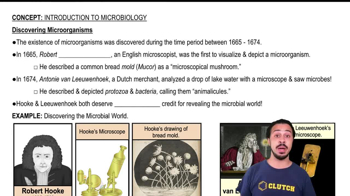
First to observe and describe microorganisms using a microscope he designed in the 1600s.
Described cells as basic units of life and published early microscopic observations of fungi.
Disproved spontaneous generation, developed pasteurization, and supported germ theory of disease.
Established Koch's postulates linking specific microbes to specific diseases.
Discovered penicillin, the first antibiotic, from mold inhibiting bacterial growth.
Introduced antiseptic surgical techniques to reduce infections.
Promoted handwashing in hospitals to prevent puerperal fever.
Developed the first vaccine using cowpox to protect against smallpox.