 Indietro
Key Concepts in Archaea and Microbial Physiology
 04:39

Termini in questo insieme (20)
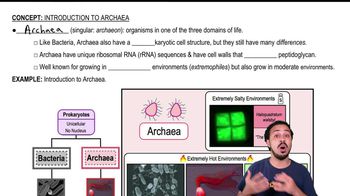
Archaea have no peptidoglycan in their cell walls, while Bacteria usually have peptidoglycan.
Archaea have ether-linked membrane lipids; Bacteria have ester-linked membrane lipids.
Many Archaea have histones, whereas Bacteria generally do not.
Methanogenesis is anaerobic methane production performed only by Archaea.
A purple protein in some Archaea that absorbs light and pumps H⁺ to create a proton gradient used to make ATP.
Extreme halophile that survives ~20% NaCl by using high intracellular potassium and salt-adapted proteins.
Not universal; some Archaea have modified or complete versions of the Krebs cycle.
Hyperthermophile living near hydrothermal vents, uses inorganic chemicals for energy, and can fix CO₂.
Extremely small archaeon that lives attached to a host archaeon and has a very small genome.
Oxidizes ammonia to nitrite, is a chemolithoautotroph, and important in marine nitrogen cycling.
Include Lokiarchaeota and Thorarchaeota; have genes similar to eukaryotes and provide clues about eukaryotic origins.
An organism that thrives in high salt concentrations.
An organism that thrives in extremely high temperatures.
Organism that obtains energy from inorganic chemicals and carbon from CO₂.
Using light as an energy source.
A difference in H⁺ concentration across a membrane used to drive ATP synthesis.
Does not require oxygen for growth or metabolism.
Archaeal RNA polymerase is more similar to eukaryotic RNA polymerase, while bacterial RNA polymerase is simpler.
Both Archaea and Bacteria have 70S ribosomes.
Introns are present in some Archaea but are rare in Bacteria.