 Indietro
Metabolism and Viruses in Microbiology
 02:17

Termini in questo insieme (20)
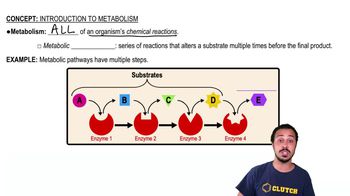
Metabolism is the sum of all chemical reactions in a cell that provide energy and build cellular components.
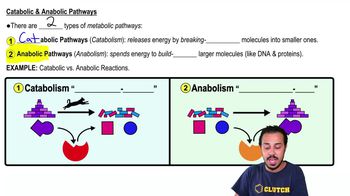
Catabolism breaks down molecules to release energy, and anabolism uses energy to build cellular components.
ATP stores and transfers energy within cells to power metabolic reactions.
Catabolism is the breakdown of complex molecules into simpler ones, releasing energy.
Anabolism is the synthesis of complex molecules from simpler ones, requiring energy input.
A virus is a non-cellular infectious agent that requires a host cell to replicate.
A virus consists of a nucleic acid genome (DNA or RNA) and a protein coat called a capsid; some have an envelope.
Viruses lack their own metabolism and rely entirely on the host cell's metabolic machinery for replication.
The viral replication cycle includes attachment, entry, replication, assembly, and release.
Attachment is the specific binding of a virus to host cell receptors, determining host range.
Viruses enter by fusion with the membrane, endocytosis, or direct penetration.
Some viruses encode enzymes to assist replication, but they do not carry out metabolism independently.
The lytic cycle destroys the host cell after replication; the lysogenic cycle integrates viral DNA into the host genome.
Viruses can alter host metabolism to favor viral replication, often increasing nucleotide and protein synthesis.
An enveloped virus has a lipid membrane derived from the host cell surrounding the capsid.
The capsid protects viral nucleic acid and aids in delivery into host cells.
Viruses can have DNA or RNA, which may be single-stranded or double-stranded.
Viral genome replication produces copies of the viral nucleic acid for new virions.
Viruses use the host cell's ribosomes and machinery to translate viral mRNA into proteins.
Host metabolism provides energy and building blocks for assembling new viral particles.