 Indietro
Microbiology: Adaptive Immunity and Microbial Pathogenesis
 04:57

Termini in questo insieme (29)
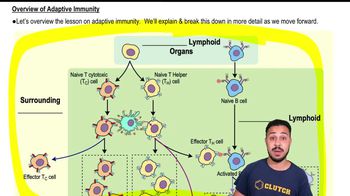
Adaptive immunity is a specific immune response involving lymphocytes that recognize and remember specific pathogens for a stronger response upon re-exposure.
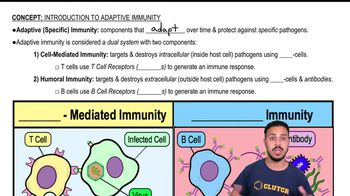
Humoral immunity involves B cells and antibody production; cell-mediated immunity involves T cells targeting infected or abnormal cells.
Cytokines are signaling proteins secreted by immune cells that regulate immunity, inflammation, and hematopoiesis.
An antigen is any molecule that triggers an immune response; an epitope is the specific part of the antigen recognized by immune cells; a hapten is a small molecule that elicits an immune response only when attached to a larger carrier.
An antibody is a protein produced by B cells that binds specifically to antigens to neutralize or mark them for destruction.
Immunoglobulins (Ig) are antibodies classified into different classes based on structure and function, such as IgG, IgA, IgM, IgE, and IgD.
Valence refers to the number of antigen-binding sites on an antibody molecule.
An antibody has two heavy chains and two light chains forming a Y-shaped molecule with variable regions that bind antigens and constant regions that determine class.
The variable region of the antibody binds specifically to the antigen on the pathogen.
IgG is the most abundant antibody in blood and tissue fluids; it provides long-term immunity and can cross the placenta to protect babies.
IgA is found in mucosal areas like saliva, tears, and breast milk; it protects mucous membranes by preventing pathogen attachment.
IgM is the first antibody produced in an immune response; it is pentameric and effective at agglutination and complement activation.
IgE binds to allergens and triggers allergic responses by activating mast cells and basophils.
B cells are lymphocytes that produce antibodies after activation by antigen exposure.
Agglutination is the clumping of pathogens by antibodies, making them easier to be cleared by immune cells.
Opsonization is the coating of pathogens by antibodies to enhance phagocytosis by immune cells.
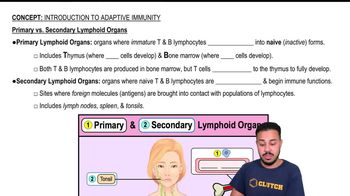
APCs are cells like dendritic cells that process and present antigens to T cells to initiate adaptive immunity.
Helper T cells activate B cells and cytotoxic T cells by releasing cytokines, coordinating the immune response.
Cytotoxic T cells induce apoptosis in infected cells using perforin to create pores and granzymes to trigger cell death.
LD50 is the lethal dose of a pathogen that kills 50% of a test population; a lower LD50 indicates higher virulence.
A biofilm is a community of bacteria embedded in a protective matrix, enhancing resistance to antibiotics and immune defenses.
Capsules prevent phagocytosis by immune cells, helping bacteria avoid destruction.
Antigenic variation is the alteration of surface proteins by pathogens to evade immune detection.
Exotoxins are secreted proteins with specific targets; endotoxins are lipopolysaccharides from Gram-negative bacteria that trigger inflammation.
Lysozyme is an enzyme in secretions that breaks down bacterial cell walls, providing a chemical barrier to infection.
Granulocytes are white blood cells with granules; include neutrophils, eosinophils, and basophils, each with distinct immune roles.
NK cells kill virus-infected and tumor cells by inducing apoptosis without prior sensitization.
Inflammation is a protective response to injury or infection that removes harmful stimuli and initiates healing.
Complement is a protein system that destroys microbes by opsonization, inflammation, and forming membrane attack complexes.