 Indietro
Microbiology: Antimicrobial Drugs and Resistance
 05:33

Termini in questo insieme (29)
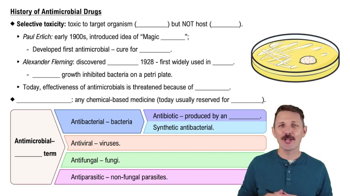
Antimicrobial drugs are agents that kill or inhibit the growth of microorganisms, including bacteria, viruses, fungi, and parasites.
Alexander Fleming discovered penicillin.
Broad-spectrum drugs target a wide range of Gram-positive and Gram-negative bacteria, while narrow-spectrum drugs target specific types of bacteria.
Empiric therapy is the use of broad-spectrum antibiotics to treat seriously ill patients before the exact causative bacterium is identified.
Prolonged use can disrupt normal microbiota, increasing risk of Clostridioides difficile infections.
Bacteriostatic drugs inhibit bacterial growth; bactericidal drugs kill bacteria.
Killing bacteria releases endotoxins, which can worsen symptoms or cause toxic shock.
Antibiotics are natural microbial products; synthetic antimicrobials are chemically made; semisynthetic are modified natural antibiotics.
4th generation drugs have the most expanded capabilities over earlier generations.
Selective toxicity means a drug kills or inhibits microbes without harming the host.
The therapeutic index is the ratio of the toxic dose to the therapeutic dose, indicating drug safety.
True. A higher therapeutic index means a larger safety margin.
Drugs toxic to kidneys are nephrotoxic; those toxic to liver are hepatotoxic.
Half-life is the time it takes for the drug concentration in the body to reduce by half.
Beta-lactams block cell wall synthesis; bacterial walls mainly consist of peptidoglycan.
Beta-lactamases are enzymes that break down beta-lactam antibiotics, causing resistance.
They bind to beta-lactamases, preventing them from destroying beta-lactam antibiotics.
5th generation cephalosporins are effective against MRSA/ORSA strains.
Glycopeptides and carbapenems are often reserved for multidrug-resistant strains.
CRE stands for Carbapenem-Resistant Enterobacteriaceae; they are Gram-negative.
CRA stands for Carbapenem-Resistant Acinetobacter.
Glycopeptides inhibit cell wall synthesis but are not beta-lactams.
Vancomycin is used to treat MRSA and Clostridioides difficile infections.
VRSA is resistant to vancomycin (the "V" stands for vancomycin).
Isoniazid targets mycolic acid synthesis in Mycobacterium tuberculosis cell walls.
Quinolones target DNA gyrase; rifamycins target RNA polymerase.
Sulfonamides inhibit folic acid synthesis in bacteria.
Humans do not synthesize folic acid; they obtain it from diet, so sulfonamides selectively target bacteria.
Drug synergism occurs when two drugs combined have a greater effect than each alone.