 Indietro
Microbiology: Antimicrobials, Respiratory, Skin, and Nervous System Infections
 05:33

Termini in questo insieme (28)
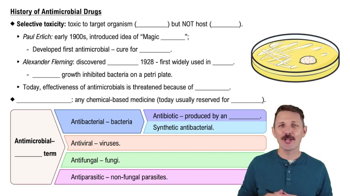
Empiric therapy is treatment given before a specific pathogen is identified. Prophylaxis is treatment given to prevent infection before it occurs.
1. Enzymatic drug inactivation
2. Alteration of drug target site
3. Decreased drug uptake or increased efflux
4. Metabolic pathway changes bypassing drug action
Broad-spectrum antimicrobials target a wide range of bacteria; narrow-spectrum target specific types. Empiric therapy may be broad-spectrum to cover unknown pathogens.
Viruses and eukaryotic pathogens share host cell machinery, making selective targeting difficult without harming host cells.
Targets include viral entry, uncoating, nucleic acid synthesis, protein synthesis, assembly, and release.
Intrinsic resistance is natural to a species; acquired resistance arises via mutation or gene transfer.
Carbapenem-resistant Enterobacteriaceae, drug-resistant Neisseria gonorrhoeae, and drug-resistant Clostridioides difficile.
Based on surface proteins hemagglutinin (H) and neuraminidase (N), e.g., H1N1.
All are caused by coronaviruses; differ in transmission, severity, and pandemic impact, with COVID-19 being the most widespread.
Oseltamivir blocks viral neuraminidase, preventing release of new influenza virions.
Upper respiratory tract harbors normal microbiota such as Firmicutes and Proteobacteria; lower tract is mostly sterile.
Antigenic drift is gradual mutation; antigenic shift is abrupt reassortment causing pandemics.
Superantigens cause excessive T-cell activation leading to massive cytokine release and immune system overreaction.
Classifies Streptococcus species based on carbohydrate antigens in their cell walls, e.g., Group A (S. pyogenes), Group B (S. agalactiae).
Resistance arises via methylation of 23S rRNA, preventing macrolide binding to the ribosome.
Antigen: molecule triggering immune response
Antibody: immune protein binding antigen
Antitoxin: antibody neutralizing toxin
Toxoid: inactivated toxin used as vaccine
Children have shorter, more horizontal Eustachian tubes that facilitate pathogen entry and fluid buildup.
Typical pneumonia caused by bacteria like Streptococcus pneumoniae with lobar consolidation; atypical pneumonia caused by organisms like Mycoplasma with diffuse symptoms.
Mycosis is a fungal infection; increasing due to immunosuppression and medical interventions.
They mimic nucleotides, causing premature DNA chain termination during viral replication.
Coagulase-positive (e.g., S. aureus) are more virulent; coagulase-negative are less pathogenic skin commensals.
Include coagulase, protein A, hemolysins, and toxins causing skin infections and systemic disease.
Botulinum toxin blocks acetylcholine release causing flaccid paralysis; tetanus toxin blocks inhibitory neurons causing spastic paralysis.
PEP provides rabies immunoglobulin and vaccine to neutralize virus before CNS infection.
CSF cushions the brain and spinal cord; meninges protect and enclose the CNS.
Protects CNS by restricting passage of pathogens and toxins from blood to brain tissue.
Caused by Streptococcus pneumoniae; prevented by pneumococcal vaccines.
Mycobacterium leprae prefers cooler temperatures found in peripheral nerves, limiting CNS involvement.