 Indietro
Microbiology Chapters 1-5 Exam Review
 02:13
02:13
Termini in questo insieme (30)
Loss of a protein's normal three-dimensional shape, often caused by high temperature or pH changes.
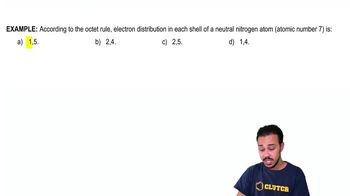
Subatomic particle that determines an element's identity by its positive charge and atomic number.
Unequal distribution of electrical charge in a molecule, making molecules like water effective solvents.
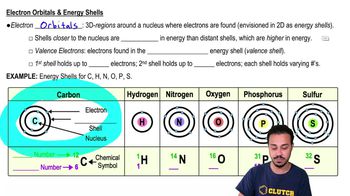
Electron in the outermost shell that influences chemical reactivity and bonding.
Atom of the same element with a different number of neutrons, affecting atomic mass but not chemical properties.
Bond formed when atoms share electrons to achieve stability.
Minimum energy needed to begin a chemical reaction, often lowered by enzymes.
Weak attraction between molecules that helps produce many of water's unique properties.
Product of ocular-lens power and objective-lens power, e.g., 10x ocular × 40x objective = 400x.
Ability to distinguish two nearby points as separate under a microscope.
Material used with the 100x objective to reduce refraction and increase resolution.
Random jittering caused by collisions with surrounding molecules, not true motility.
Practice used to prevent contamination of cultures, workers, and the environment.
Reagent that removes dye from gram-negative cells, typically alcohol or acetone.
Positively charged stain that colors bacterial cells by binding to negatively charged cell components.
Dye repelled by bacterial cells that stains the background, preserving cell size and shape.
Spherical bacterial cell shape.
Rod-shaped bacterial cell.
Spherical bacterial cells arranged in chains.
Spherical bacterial cells arranged in irregular clusters.
Cell-wall polymer made from NAG and NAM sugars, providing structural support.
Thin peptidoglycan layer with an additional outer membrane containing lipopolysaccharide (LPS).
Polymer found in gram-positive cell walls that provides rigidity and antigenic properties.
Waxy cell-wall component responsible for acid-fastness in bacteria like Mycobacterium.
Pathway using oxygen as the final electron acceptor to produce ATP efficiently.
First pathway of glucose breakdown with net yield of 2 ATP and 2 NADH molecules.
Membrane series that passes electrons and pumps protons to create a proton gradient.
Proton movement down a gradient through a membrane protein to drive ATP synthesis.
Enzyme driven by proton flow to phosphorylate ADP into ATP.
Pathway that regenerates NAD+ without using Krebs cycle or ETC, producing less ATP.