 Indietro
Microbiology Exam 3 Study Points
 07:44

Termini in questo insieme (29)
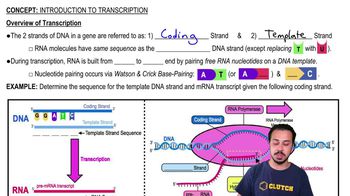
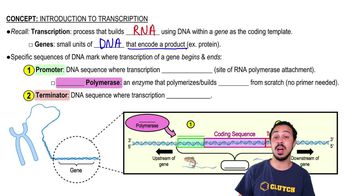
Transcription is the process of copying DNA into RNA.
Translation is the process of synthesizing proteins from mRNA.
DNA polymerase synthesizes new DNA strands by adding nucleotides complementary to the template strand.
Topoisomerase (gyrase) relieves DNA supercoiling during replication by cutting and rejoining DNA strands.
The leading strand is synthesized continuously; the lagging strand is synthesized discontinuously as Okazaki fragments.
RNA polymerase synthesizes RNA from a DNA template during transcription.
A transposon is a DNA sequence that can move within the genome; transposase is the enzyme that facilitates this movement.
The Ames test detects mutagenic potential of chemicals by observing mutations in bacteria.
Transformation is the uptake of free DNA from the environment by bacteria.
Transduction is the transfer of bacterial DNA by a bacteriophage.
Conjugation is the direct transfer of DNA between bacteria via a pilus.
Adenine (A) pairs with Thymine (T), and Guanine (G) pairs with Cytosine (C).
Silent: no amino acid change; missense: different amino acid; nonsense: stop codon; frameshift: shifts reading frame.
RNA polymerase binds the promoter; repressor binds operator to block transcription; lactose binds repressor to inactivate it, allowing transcription.
miRNA regulates gene expression by binding mRNA and inhibiting translation or causing degradation.
Eukaryotic transcription includes exons and introns, with splicing by snRNPs to remove introns.
Exons are coding sequences; introns are non-coding sequences removed during RNA splicing.
UV light causes thymine dimers, distorting DNA and blocking replication.
Griffith showed that non-virulent bacteria could become virulent by uptake of genetic material from dead virulent bacteria (transformation).
Inducible operons are off until activated; repressible operons are on until deactivated by a corepressor.
Bacteria gain resistance by mutation or acquiring resistance genes via plasmids or horizontal gene transfer.
A plasmid is a small, circular, self-replicating DNA molecule in bacteria.
An auxotroph is a mutant organism that requires a specific nutrient that the wild type does not.
Restriction enzymes cut DNA at specific sequences, producing fragments for cloning or analysis.
Blue/white screening identifies bacteria with foreign DNA inserts; white colonies contain the insert disrupting the lacZ gene.
The Human Genome Project aimed to sequence and map all human genes.
Proteomics is the study of the entire set of proteins expressed by a genome.
Bioinformatics uses computational tools to analyze biological data like DNA sequences.
Taq DNA polymerase is used in PCR because it is heat-stable.