 Indietro
Microbiology Fundamentals
 03:36
03:36

Termini in questo insieme (30)
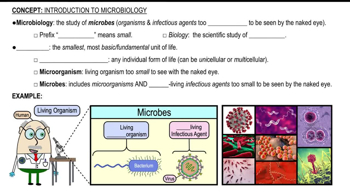
Benefits: Nutrient cycling, food production (fermentation), biotechnology, ecological balance.
Detriments: Infectious diseases, food spoilage, biofouling.
Beneficial: Lactobacillus ferments milk to yogurt.
Harmful: Salmonella causes foodborne illness.
New or re-emerging infections due to microbial evolution, environment, or human behavior. Examples: SARS, MERS, Zika, antibiotic-resistant bacteria.
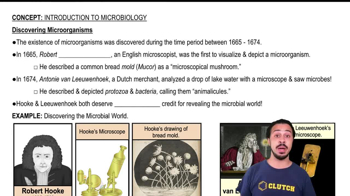
Leeuwenhoek: First to observe microbes.
Pasteur: Disproved spontaneous generation, pasteurization.
Koch: Germ theory, Koch's postulates.
Lister: Antiseptic surgery.
Viruses are acellular, lack metabolism, need host cells.
Cellular life (prokaryotes, eukaryotes) have cells and independent metabolism.
Prokaryotes: No nucleus, simple (Bacteria, Archaea).
Eukaryotes: Nucleus, organelles (Fungi, Protozoa, Algae).
Explains mitochondria and chloroplast origin from ancestral prokaryotes, supported by DNA and ribosome similarities.
Flagella: Motility.
Pili: Attachment and conjugation.
Capsules: Protection and adherence.
Shapes: Cocci (spherical), Bacilli (rod), Spirilla (spiral).
Arrangements: Chains (strepto-), clusters (staphylo-), pairs (diplo-).
Gram-positive: Thick peptidoglycan, teichoic acids.
Gram-negative: Thin peptidoglycan, outer membrane with lipopolysaccharide.
Acid-fast: Mycolic acids.
Diffusion, facilitated diffusion, osmosis, active transport, group translocation.
Dormant, resistant structures formed by Bacillus and Clostridium; survive heat, desiccation, chemicals.
1 mm = 1000 µm; 1 µm = 1000 nm.
Magnification, resolution, contrast, illumination.
Bright-field, dark-field, phase-contrast, fluorescence, differential interference contrast, electron microscopy (SEM, TEM).
Simple stain: whole cell.
Gram stain: Gram+ vs Gram-.
Acid-fast stain: mycobacteria.
Endospore stain: detects endospores.
Anabolism: Builds complex molecules, requires energy.
Catabolism: Breaks down molecules, releases energy.
Substrate-level phosphorylation, oxidative phosphorylation, photophosphorylation.
Glycolysis: Glucose to pyruvate.
Intermediate step: Pyruvate to Acetyl-CoA.
Krebs cycle: Acetyl-CoA to CO2.
Electron transport chain: ATP via oxidative phosphorylation.
Occurs without oxygen; regenerates NAD+. Examples: lactic acid fermentation (Lactobacillus), ethanol fermentation (yeast).
Toxic forms: superoxide radical, hydrogen peroxide, hydroxyl radical.
Enzymes: superoxide dismutase, catalase, peroxidase.
Obligate aerobe: top growth.
Obligate anaerobe: bottom.
Facultative anaerobe: throughout, mostly top.
Microaerophile: just below surface.
Aerotolerant anaerobe: evenly throughout.
Temperature: psychrophiles, mesophiles, thermophiles, hyperthermophiles.
pH: acidophiles, neutrophiles, alkaliphiles.
Osmotic pressure: halophiles tolerate high salt.
Mutualism: both benefit.
Commensalism: one benefits, other unaffected.
Parasitism: one benefits at other's expense.
Microbial communities attached to surfaces; increase resistance to antibiotics and immune responses.
Pure cultures by streak, pour, or spread plate.
Media types: defined, complex, enriched, selective, differential, anaerobic.
Lag: adaptation, no division.
Log: rapid division.
Stationary: growth = death.
Death: cells die faster than divide.
\(N_t = N_0 \times 2^n\) where N_t is final cell number, N_0 initial, n number of generations.
Time required for a bacterial population to double in number.
Direct counts (microscopy, electronic counters), viable plate counts, turbidity (spectrophotometry), serial dilutions.