 Indietro
Microbiology Fundamentals from Tortora et al. (14th ed.)
 03:36
03:36

Termini in questo insieme (28)
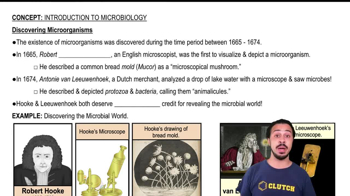
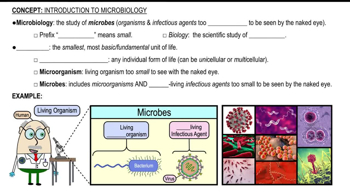
Microbiology is the study of microorganisms, including bacteria, viruses, fungi, protozoa, and algae.
Organisms too small to be seen clearly by the naked eye, including bacteria, viruses, fungi, protozoa, and microscopic algae.
Prokaryotic cells lack a nucleus and membrane-bound organelles; eukaryotic cells have a nucleus and organelles.
The three domains are Bacteria, Archaea, and Eukarya.
The cell wall provides shape, protection, and prevents osmotic lysis in bacteria.
The Gram stain differentiates bacteria into Gram-positive and Gram-negative based on cell wall structure.
Thick peptidoglycan layer with teichoic acids; retains crystal violet stain, appearing purple.
Thin peptidoglycan layer and outer membrane with lipopolysaccharides; does not retain crystal violet, appears pink/red.
Flagella provide motility to bacteria, allowing movement toward or away from stimuli.
Binary fission is the asexual reproduction process where one bacterial cell divides into two identical daughter cells.
Endospores are dormant, resistant structures formed by some bacteria to survive harsh conditions.
Enzymes catalyze biochemical reactions, increasing reaction rates without being consumed.
Aerobic respiration uses oxygen as the final electron acceptor; anaerobic respiration uses other molecules.
Fermentation is an anaerobic process that converts sugars into acids, gases, or alcohol to generate energy.
Microbial genetics studies gene structure, function, and transfer, crucial for understanding mutation, resistance, and biotechnology.
Plasmids are small, circular DNA molecules in bacteria that carry genes, often for antibiotic resistance.
Transformation is the uptake of free DNA from the environment by a bacterial cell.
Transduction is gene transfer between bacteria via bacteriophages (viruses).
Conjugation is direct transfer of DNA between bacterial cells through a pilus.
Viruses are infectious agents that require host cells to replicate and can cause diseases in humans and other organisms.
Lytic cycle results in host cell destruction; lysogenic cycle integrates viral DNA into host genome.
Bright-field, dark-field, phase-contrast, fluorescence, and electron microscopy are key types for viewing microbes.
Aseptic technique prevents contamination of cultures and the environment during microbiological work.
Normal microbiota are microbes that live on or in the body without causing disease and can protect against pathogens.
Pathogenicity is the ability to cause disease; virulence is the degree of pathogenicity.
Biofilms are communities of microorganisms attached to surfaces, embedded in a protective matrix.
Antibiotics are substances that kill or inhibit bacterial growth, used to treat infections.
Bacteria resist antibiotics by enzymatic degradation, altering targets, efflux pumps, or preventing drug entry.