 Indietro
Microbiology Genetics and Molecular Biology Key Terms
 02:04

Termini in questo insieme (30)
Genetics is the study of heredity and the variation of inherited characteristics.
Chromosomes are structures within cells that contain DNA and carry genetic information.
Genes are segments of DNA that code for proteins or functional RNA molecules.
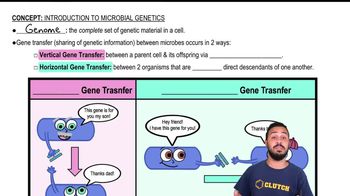
The genome is the complete set of genetic material in an organism.
Complementary refers to the specific pairing of nucleotide bases in DNA or RNA (A with T/U, C with G).
Gene expression is the process by which information from a gene is used to synthesize functional gene products like proteins.
The genetic code is the set of rules by which nucleotide triplets (codons) specify amino acids in protein synthesis.
Genomics is the study of genomes, including their structure, function, evolution, and mapping.
Genotype is the genetic makeup of an organism; the specific set of genes it carries.
Phenotype is the observable physical or biochemical characteristics of an organism, influenced by genotype and environment.
Transcription is the process of copying a gene's DNA sequence into messenger RNA (mRNA).
Translation is the process where ribosomes synthesize proteins using the sequence encoded in mRNA.
A promotor is a DNA sequence where RNA polymerase binds to initiate transcription.
A terminator is a DNA sequence signaling the end of transcription.
A codon is a sequence of three nucleotides in mRNA that specifies an amino acid.
An anticodon is a sequence of three nucleotides in tRNA complementary to an mRNA codon.
mRNA (messenger RNA) carries genetic information from DNA to the ribosome for protein synthesis.
tRNA (transfer RNA) delivers specific amino acids to the ribosome during translation.
A mutation is a change in the nucleotide sequence of DNA.
Base substitution is a mutation where one nucleotide is replaced by another.
A missense mutation changes a codon so that a different amino acid is incorporated into the protein.
A nonsense mutation changes a codon to a stop codon, terminating protein synthesis prematurely.
A frameshift mutation results from insertions or deletions that shift the reading frame of the genetic code.
Spontaneous mutations occur naturally without external influence, often due to errors in DNA replication.
A mutagen is an agent that increases the frequency of mutations, such as chemicals or radiation.
Replica plating is a technique to detect mutants by transferring colonies to selective media.
A carcinogen is a mutagen that can cause cancer by inducing mutations in genes controlling cell growth.
Recombination is the exchange of genetic material between different DNA molecules, creating genetic diversity.
Vertical gene transfer is the transmission of genetic material from parent to offspring.
Horizontal gene transfer is the transfer of genes between organisms in the same generation.