 Indietro
Microbiology: Host-Microbe Interactions, Virulence, Infection, and Safety
 02:35

Termini in questo insieme (47)
Normal microbiota provides: 1) protection against pathogens, 2) stimulation of the immune system, and 3) production of essential nutrients like vitamins.
Clostridioides difficile is the bacterial species commonly responsible for antibiotic-associated diarrhea.
GBS is part of normal vaginal microbiota in women but can cause sepsis, meningitis, and pneumonia in newborns due to their immature immune systems.
Opportunistic pathogens can cause disease if dysbiosis occurs from immune weakening or antibiotic use.
Tropism is the preference of a microbe for a specific host tissue or cell type.
Most emerging pathogens are agents that have expanded their host tropism.
Pathogenicity is the ability to cause disease; virulence is the degree of damage caused by the pathogen.
Virulence factors are molecules produced by pathogens that enable them to cause disease.
STIs like HIV, chlamydia, and gonorrhea can be transmitted unknowingly because they often cause asymptomatic infections.
R0 is the average number of secondary infections produced by one infected individual in a susceptible population.
A pathogen with an R0 of 4 spreads more quickly than one with an R0 of 1.
An attenuated pathogen is a weakened form of a pathogen that causes less or no disease.
ID50 is the infectious dose to infect 50% of hosts; a low ID50 means high infectivity, a high ID50 means low infectivity.
LD50 is the lethal dose to kill 50% of hosts; a low LD50 means high toxicity, a high LD50 means low toxicity.
Toxemia is the presence of toxins in the bloodstream.
Endotoxins are lipopolysaccharides (LPS) from Gram-negative bacteria released when bacteria die; exotoxins are proteins secreted by Gram-positive and Gram-negative bacteria.
Endotoxins are released when bacteria die or lyse. Exotoxins are released when bacteria are alive and growing.
The Lipid A region of LPS is the endotoxin responsible for toxicity.
Type I exotoxins act at the cell surface; Type II disrupt membranes; Type III enter cells and disrupt functions.
Hemolysins and cytolysins are Type II exotoxins that disrupt host cell membranes causing lysis.
Superantigens cause excessive immune activation leading to toxic shock; they belong to the Type I exotoxin family.
AB toxins have a B subunit for binding and an A subunit with enzymatic activity causing toxicity.
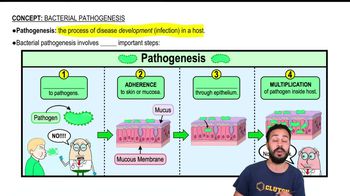
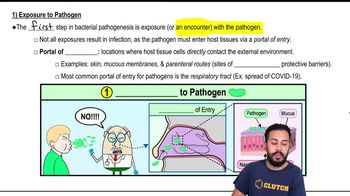
Portal of entry is the site where pathogens enter the body; the mucous membranes are the key portals.
Parenteral entry is entry through breaks in the skin or mucous membranes, such as injections or wounds.
The respiratory tract mucous membranes are the portal of entry for SARS-CoV-2.
Fecal-oral route is the most common transmission route for digestive system pathogens.
Transplacental entry is the passage of pathogens from mother to fetus across the placenta.
TORCH: Toxoplasmosis, Other (syphilis, varicella), Rubella, Cytomegalovirus, Herpes simplex. Outcomes include miscarriage, birth defects, or neonatal infection.
Adhesins are microbial surface molecules that enable attachment to host cells.
Fimbriae and pili are hair-like structures that help bacteria adhere to host tissues and sometimes transfer DNA.
Quorum sensing is bacterial communication via chemical signals to coordinate biofilm formation and virulence.
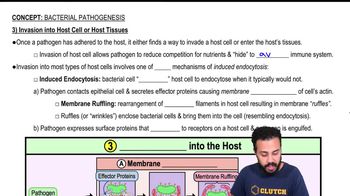
Invasins are proteins that facilitate microbial entry into host cells by altering the cytoskeleton.
Siderophores are molecules that scavenge iron from the host to support bacterial growth.
An antigen is any molecule that triggers an immune response.
Latency is a dormant state where pathogens persist without symptoms but can reactivate later.
Masking hides antigens; mimicry imitates host molecules; variation changes antigens to evade immunity.
Capsules protect bacteria from phagocytosis and immune detection.
Portal of exit is the route pathogens leave the host, e.g., respiratory secretions, feces, urine, blood.
A fomite is an inanimate object that can transmit pathogens.
BSL-1 does not require healthcare workers to wear personal protective equipment (PPE).
BSL-4 has the most stringent PPE and containment requirements.
BSL-2 is used for working with HIV.
BSL-4 is required for Ebola and Marburg viruses.
Standard precautions include hand hygiene, use of gloves, mask/eye protection, and safe injection practices.
Contact precautions are needed for infections like MRSA, C. difficile, and scabies.
Droplet precautions are used for pathogens like influenza, pertussis, and meningitis.
Airborne precautions are required for tuberculosis, measles, and chickenpox.