 Indietro
Microbiology: Immunity and Antigen Presentation
 05:52
05:52
Termini in questo insieme (17)
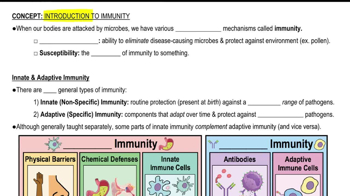
Innate immunity is the immediate, non-specific defense present at birth. Adaptive immunity is specific, develops memory, and improves upon repeated exposure.
Specificity is the immune system's ability to target specific antigens. Memory allows faster response upon re-exposure. Tolerance prevents immune response against self-antigens.
MHCI is expressed on all nucleated cells; presents intracellular antigens. MHCII is on antigen-presenting cells; presents extracellular antigens.
Intracellular antigens are degraded by proteasomes, loaded onto MHCI in the ER, and presented on the cell surface to CD8+ T cells.
Extracellular antigens are endocytosed, degraded in endosomes, loaded onto MHCII, and presented to CD4+ T cells.
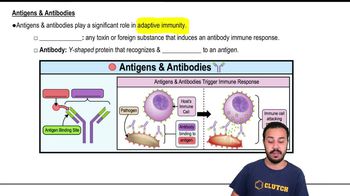
APCs process and present antigens to T helper cells, activating B cells for antibody production. The three main APCs are dendritic cells, macrophages, and B cells.
TCR has 2 peptide chains and 1 epitope binding site; recognizes peptides only with MHC. BCR has 4 chains and 2 binding sites; recognizes native antigens without MHC.
Antibodies neutralize toxins, opsonize pathogens for phagocytosis, and activate the complement system.
T helper cells express CD4, activate other immune cells, and recognize MHCII. T cytotoxic cells express CD8, kill infected cells, and recognize MHCI.
APCs present antigen to T helper cells, which activate B cells. Activated B cells proliferate and produce antibodies to eliminate extracellular pathogens.
Cell-mediated immunity involves T cells targeting infected cells. Humoral immunity involves B cells producing antibodies against extracellular pathogens.
IgA is found in mucosal areas, protects mucous membranes, and exists mainly as a dimer.
IgM is the first antibody produced in an immune response, exists as a pentamer, and is effective at complement activation.
IgG is the most abundant antibody in blood, provides long-term immunity, and can cross the placenta.
IgE is involved in allergic responses and defense against parasites by binding to mast cells and basophils.
Isotype switching is the process where B cells change the antibody class they produce without altering antigen specificity.
Isotype switching affects antibody detection and interpretation in tests, indicating different stages or types of immune response.